Tell us about the job
Takes about a minute. No obligation.

Sizing a furnace for Huron County means accounting for what the climate actually asks of heating equipment, not just square footage and insulation ratings. 94 severe weather events were recorded in Huron County, Michigan between 2015 and 2024. A contractor quoting an install here will factor that weather history into equipment selection, because a system that handles an average winter but struggles through the harder ones is undersized for this area. Duct layout, heat exchanger capacity, and the quality of the seal at every joint all carry more weight when the climate pushes the system regularly.
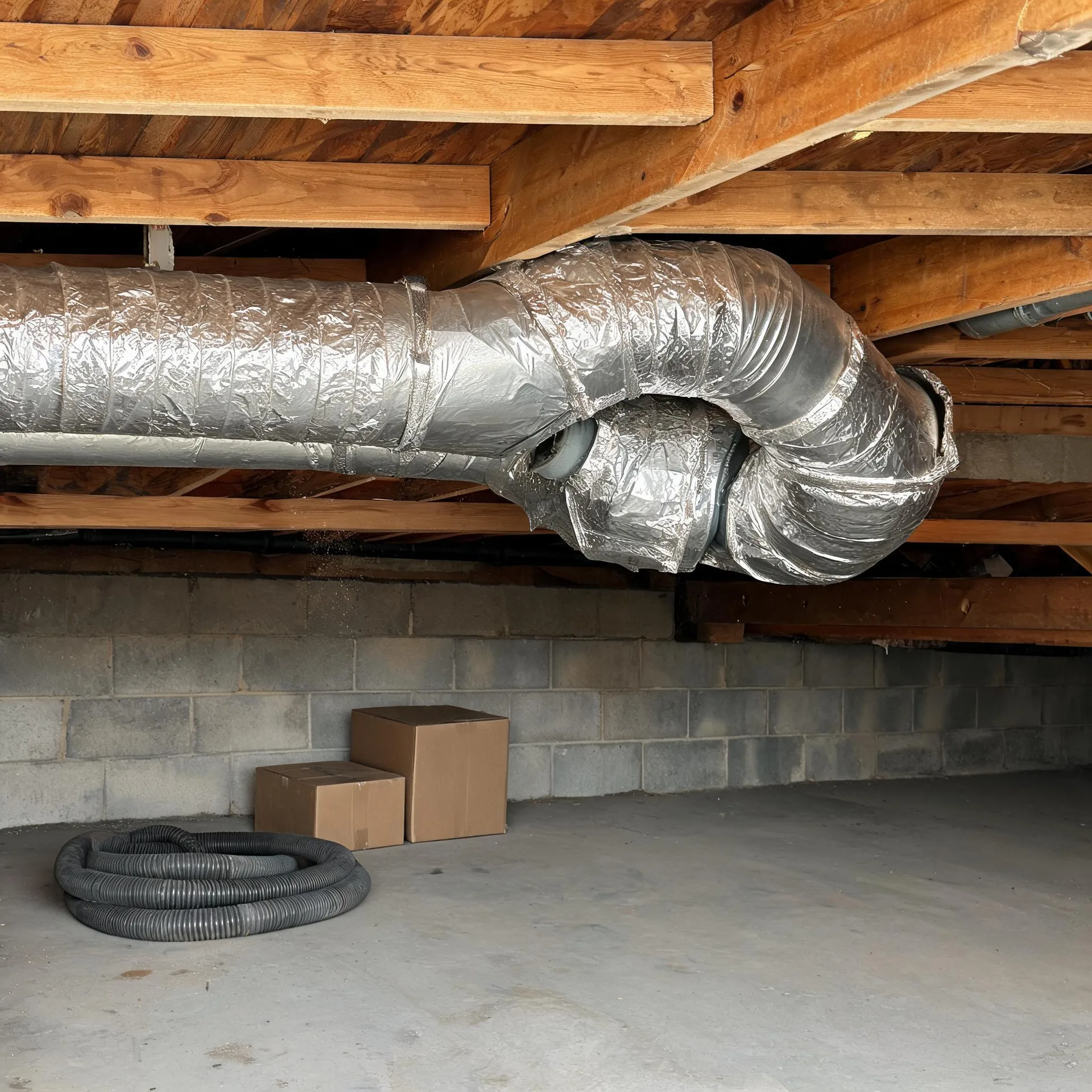
Ductwork laid down for an older generation of heating equipment was sized to move air for a system with a different output profile than what a contractor installs today. Half the homes in Huron County, Michigan were built in 1967 or earlier (2020-2024 ACS 5-year). That gap is where furnace installation jobs in this county get complicated: the furnace itself can be matched and ordered in a day, but whether the existing duct runs will deliver the new unit's output to every room is something a contractor has to measure and pressure-check on site before the old unit comes out.
What Gets Installed With a New Furnace
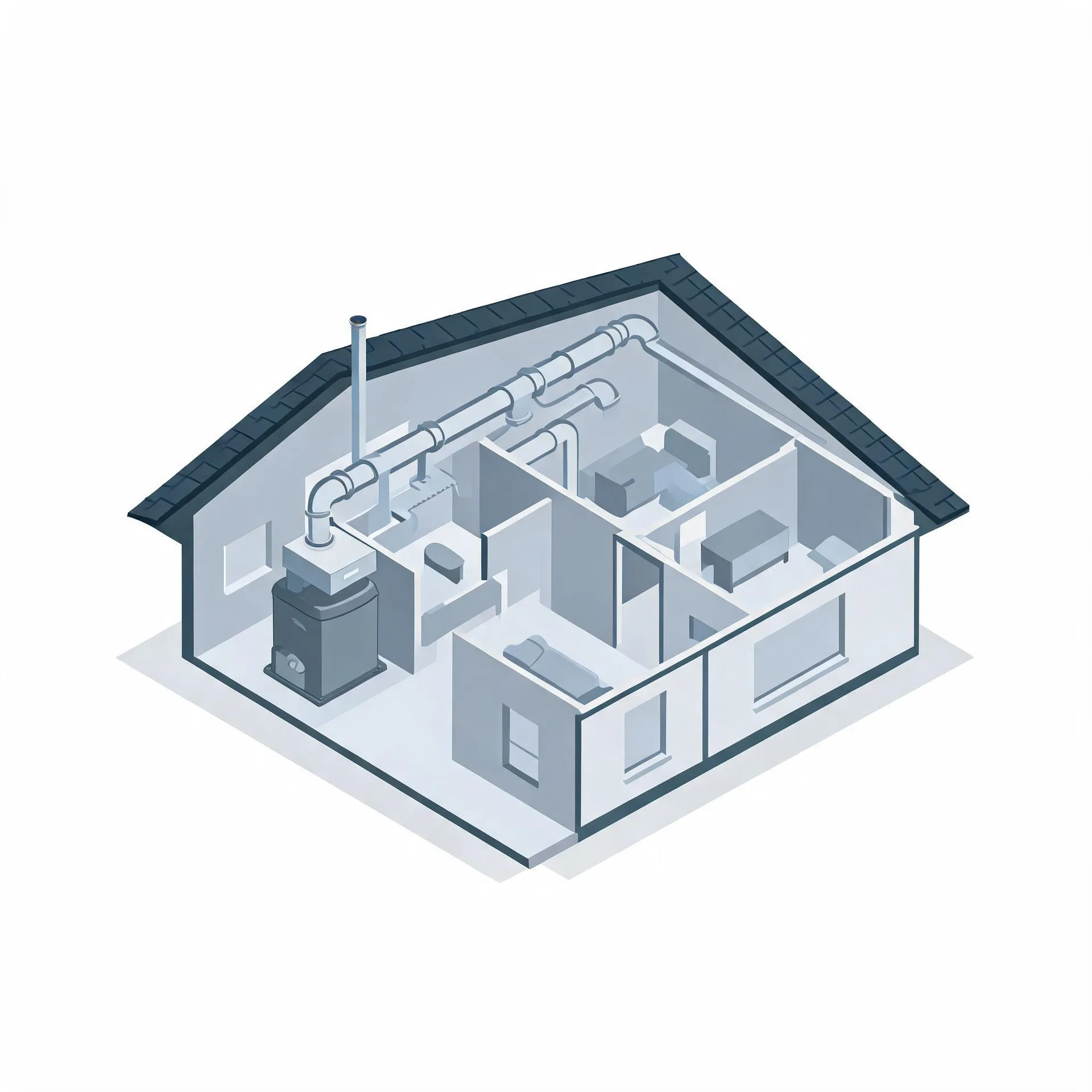
The furnace itself sits in the basement, utility room, or crawlspace and is the piece a contractor anchors the whole system to. Attached to it is the flue or vent pipe, which exits through the wall or roof and carries combustion gases out of the house. The air handler, which may be part of the furnace cabinet or a separate unit, moves conditioned air into the duct system.
The thermostat goes on an interior wall and gives the homeowner control over the system. Near the furnace, the contractor also sets the filter housing and connects the gas line and condensate drain where the equipment requires them.
The drawing shows a general layout of these components, and a licensed contractor determines exactly what applies to your home's configuration.
Get matched in Huron CountyHuron County, by the record
94 severe weather events were recorded in Huron County, Michigan between 2015 and 2024.
NOAA National Centers for Environmental Information, Storm Events Database, bulk CSV export, events 2015-01-01 through 2024-12-31.Half the homes in Huron County, Michigan were built in 1967 or earlier (2020-2024 ACS 5-year).
U.S. Census Bureau, 2020-2024 American Community Survey 5-Year EstimatesHuron County, Michigan holds 20,349 housing units (2020-2024 ACS 5-year).
U.S. Census Bureau, 2020-2024 American Community Survey 5-Year EstimatesOwners occupy 81.8% of the occupied homes in Huron County, Michigan (2020-2024 ACS 5-year).
U.S. Census Bureau, 2020-2024 American Community Survey 5-Year EstimatesFurnace Installation Rules for Huron County, Michigan6 codes, standards, and laws
What the Installation Actually Looks Like
Non-weatherized gas furnaces manufactured on or after November 19, 2015 must reach 80.0 percent AFUE.
Non-weatherized oil-fired furnaces manufactured on or after November 19, 2015 must reach 83.0 percent AFUE.
Mobile home gas furnaces manufactured on or after November 19, 2015 must reach 80.0 percent AFUE.
Non-weatherized gas furnaces manufactured on or after December 18, 2028 must reach 95.0 percent AFUE, up from the 80.0 percent minimum that applies to units manufactured before that date.
Licensing Rules for Contractors in Huron County, Michigan
Michigan issues the mechanical contractor’s licence by classification: HVAC equipment, ductwork, refrigeration, hydronic heating and cooling, and limited or unlimited heating and refrigeration service are each a separate classification a contractor has to hold.
Michigan requires a mechanical contractor’s licence: nobody may install, alter or service the regulated mechanical work unless they, or an employee, hold a licence from the department that has not been revoked or suspended.
Severe Weather Events in Huron County
Huron County weather puts real demands on heating equipment, and how hard a furnace works over its life is largely a function of what the local climate throws at it. That makes weather history relevant to any decision about what to install and how to size it.
94 severe weather events, 2015–2024. Source: NOAA National Centers for Environmental Information, Storm Events Database.