Tell us about the job
Takes about a minute. No obligation.
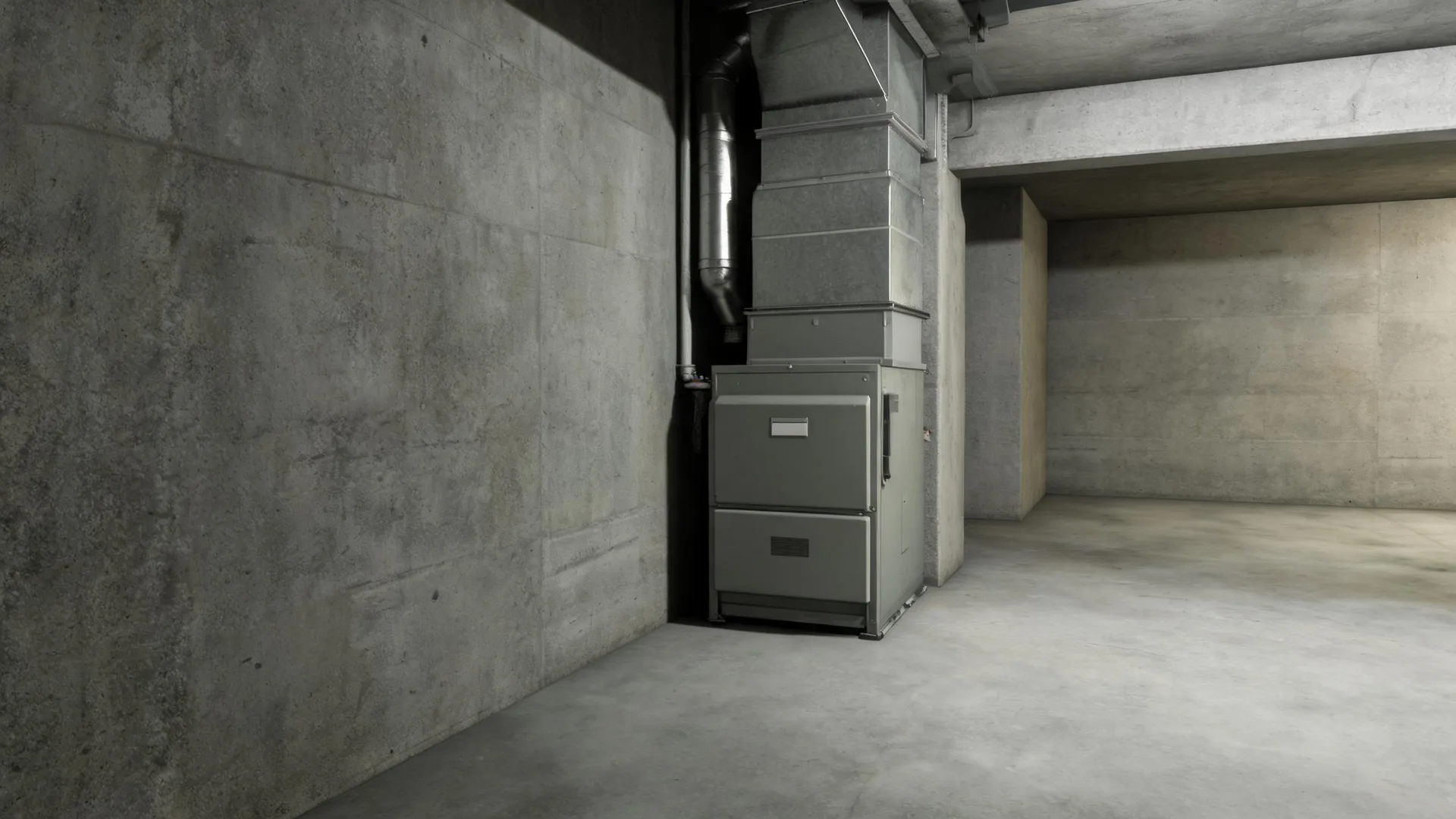
A furnace contractor quoting a job in this county has to size the system to what the house actually demands, because the install is where problems begin or end. 42 severe weather events were recorded in Cheboygan County, Michigan between 2015 and 2024. At that rate, severe weather is a real but infrequent presence, which means a poorly sized or loosely installed furnace fails here for the same reason it fails anywhere else: the work was wrong from the start. A contractor who gets the load calculation right and seals the distribution properly gives the equipment the best conditions it will see in this county.
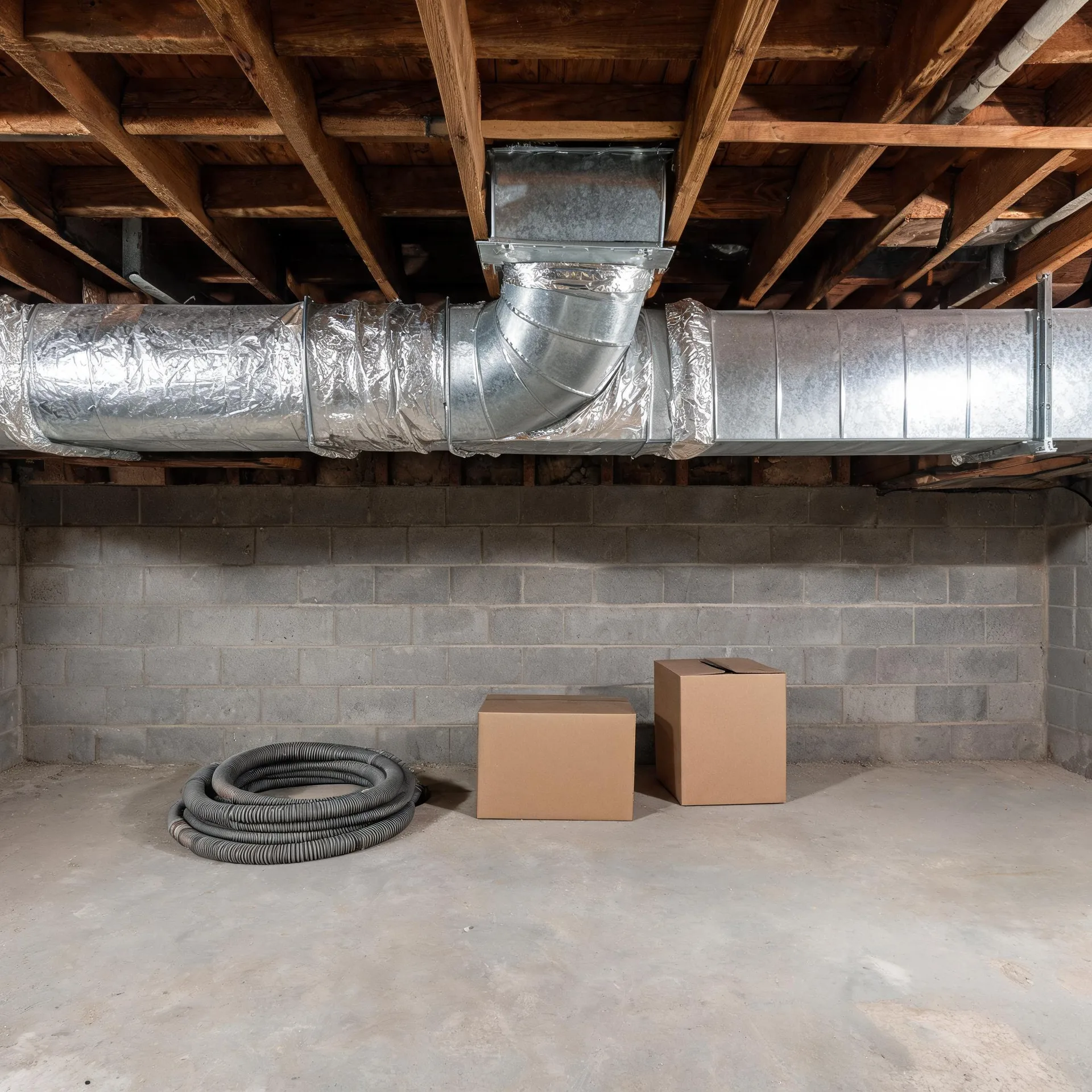
Ductwork sized and routed for an older system often does not move air the way a modern furnace needs it to. Half the homes in Cheboygan County, Michigan were built in 1980 or earlier (2020-2024 ACS 5-year). That matters on an installation job because a contractor fitting a new unit has to determine whether the existing duct layout will actually support the new equipment's airflow before the furnace itself is ever priced. Where it will not, the duct run becomes part of the job scope, and the electrical supply gets the same look, since what older wiring was run to handle and what a current furnace draws are questions a contractor answers by opening the panel, not by reading the permit.
What Gets Installed With a New Furnace
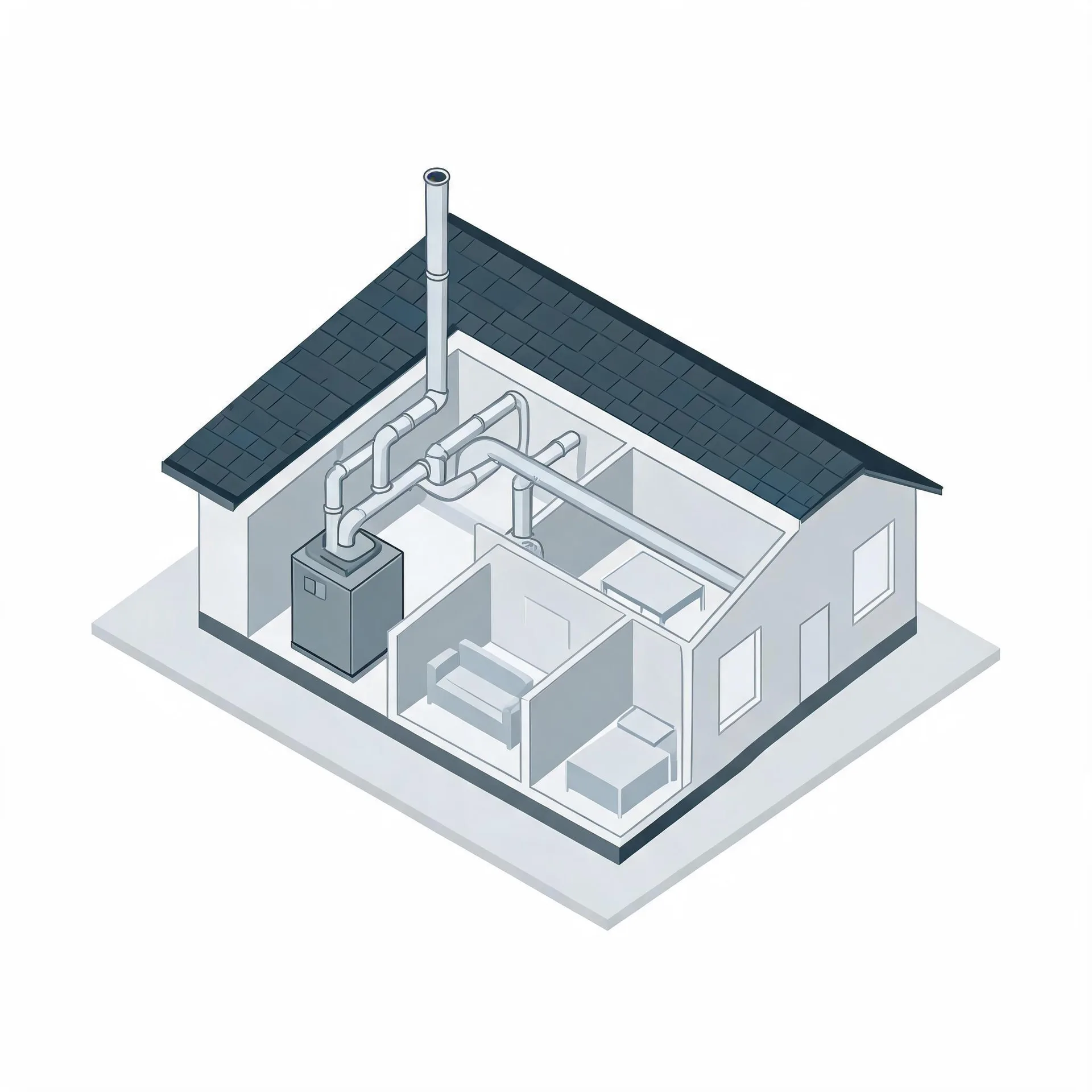
The furnace itself sits in the basement, utility room, or crawlspace and is the heart of the system. A burner inside it fires on demand, a heat exchanger warms the surrounding air, and a blower pushes that air out into the house. That is the unit a contractor sets in place first.
The flue pipe runs from the furnace up and out of the house, carrying combustion gases away. Alongside it, the thermostat mounts on a wall in the living space and tells the furnace when to fire. A condensate drain line also connects to high-efficiency units, routing moisture out to a floor drain or pump.
The drawing shows a typical layout, and a licensed contractor determines exactly what applies to this house.
Get matched in Cheboygan CountyCheboygan County, by the numbers
42 severe weather events were recorded in Cheboygan County, Michigan between 2015 and 2024.
NOAA National Centers for Environmental Information, Storm Events Database, bulk CSV export, events 2015-01-01 through 2024-12-31.Half the homes in Cheboygan County, Michigan were built in 1980 or earlier (2020-2024 ACS 5-year).
U.S. Census Bureau, 2020-2024 American Community Survey 5-Year EstimatesCheboygan County, Michigan holds 17,788 housing units (2020-2024 ACS 5-year).
U.S. Census Bureau, 2020-2024 American Community Survey 5-Year EstimatesOwners occupy 85.6% of the occupied homes in Cheboygan County, Michigan (2020-2024 ACS 5-year).
U.S. Census Bureau, 2020-2024 American Community Survey 5-Year EstimatesFurnace Installation Rules for Cheboygan County, Michigan6 sourced standards and codes
What the Installation Actually Looks Like
Non-weatherized gas furnaces manufactured on or after November 19, 2015 must reach 80.0 percent AFUE.
Non-weatherized oil-fired furnaces manufactured on or after November 19, 2015 must reach 83.0 percent AFUE.
Mobile home gas furnaces manufactured on or after November 19, 2015 must reach 80.0 percent AFUE.
Non-weatherized gas furnaces manufactured on or after December 18, 2028 must reach 95.0 percent AFUE, up from the 80.0 percent minimum that applies to units manufactured before that date.
Licensing and Legal Requirements in Cheboygan County, Michigan
Michigan issues the mechanical contractor’s licence by classification: HVAC equipment, ductwork, refrigeration, hydronic heating and cooling, and limited or unlimited heating and refrigeration service are each a separate classification a contractor has to hold.
Michigan requires a mechanical contractor’s licence: nobody may install, alter or service the regulated mechanical work unless they, or an employee, hold a licence from the department that has not been revoked or suspended.
Severe Weather Events in Cheboygan County
Extreme weather puts a sustained load on heating equipment, and how hard a furnace works over its life is shaped by local conditions. That makes the weather record for this area a practical reference point for any installation decision.
42 severe weather events, 2015–2024. Source: NOAA National Centers for Environmental Information, Storm Events Database.