Tell us about the job
Takes about a minute. No obligation.
Sizing a furnace for a Hillsdale County home starts with the house itself: its insulation, its layout, and how air moves through it. 77 severe weather events were recorded in Hillsdale County, Michigan between 2015 and 2024. At that rate, severe weather is a genuine part of the operating picture but not the dominant one, so a contractor quotes around what the structure actually demands rather than treating storm exposure as the headline variable. Duct placement, equipment fit, and the quality of the install determine how the system runs through Michigan winters far more than any single weather event will.
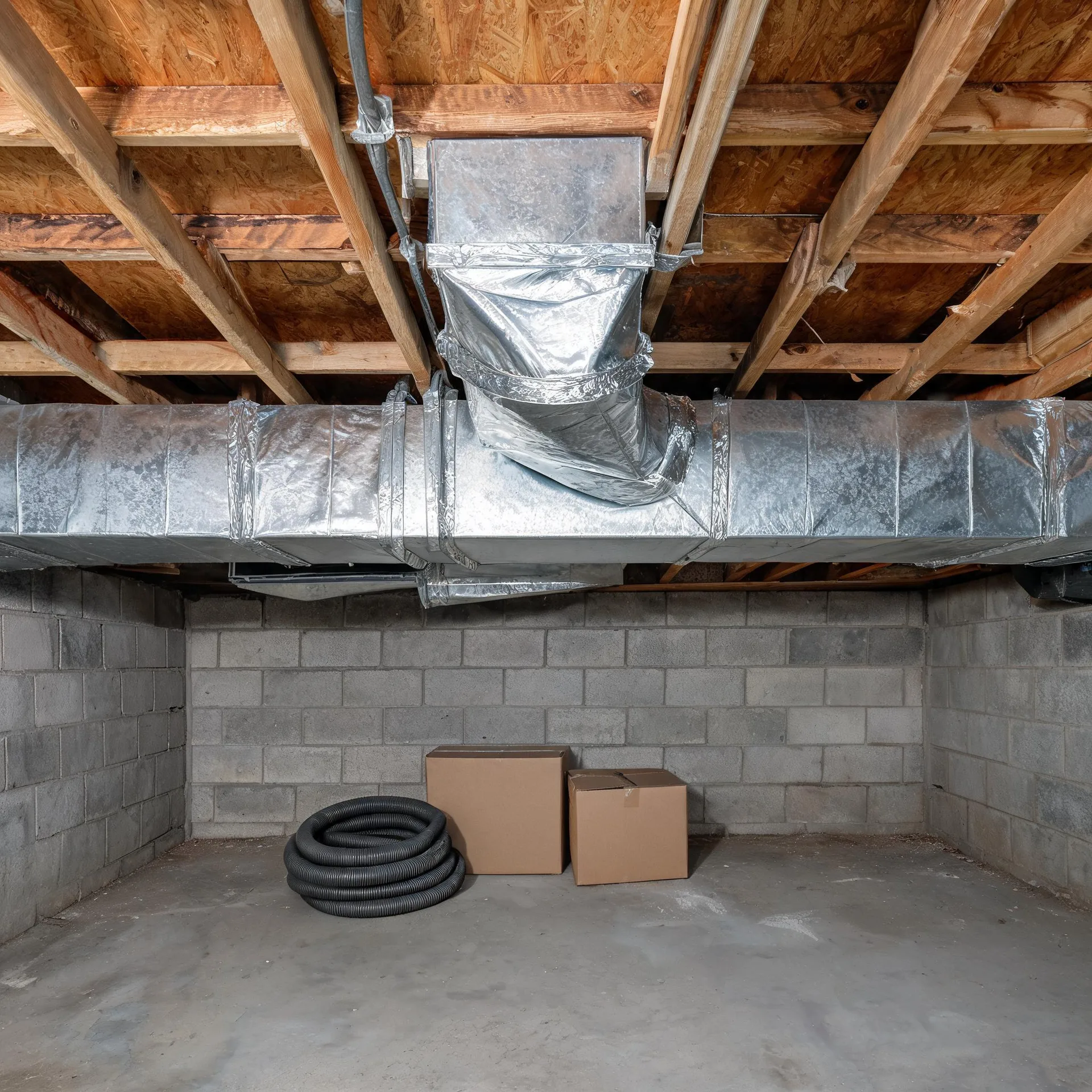
Ductwork laid down for an older furnace carries assumptions about static pressure, trunk sizing, and return-air placement that a modern unit does not share. Half the homes in Hillsdale County, Michigan were built in 1971 or earlier (2020-2024 ACS 5-year). When a contractor quotes a furnace installation in this county, the first real question is whether the existing duct system will move air the way the new equipment expects, or whether it will fight it. A unit that is undersupplied on the return side runs harder, short-cycles, and heats the house unevenly. That answer lives in the crawlspace and the plenum, not on the spec sheet.
What Gets Installed With a New Furnace
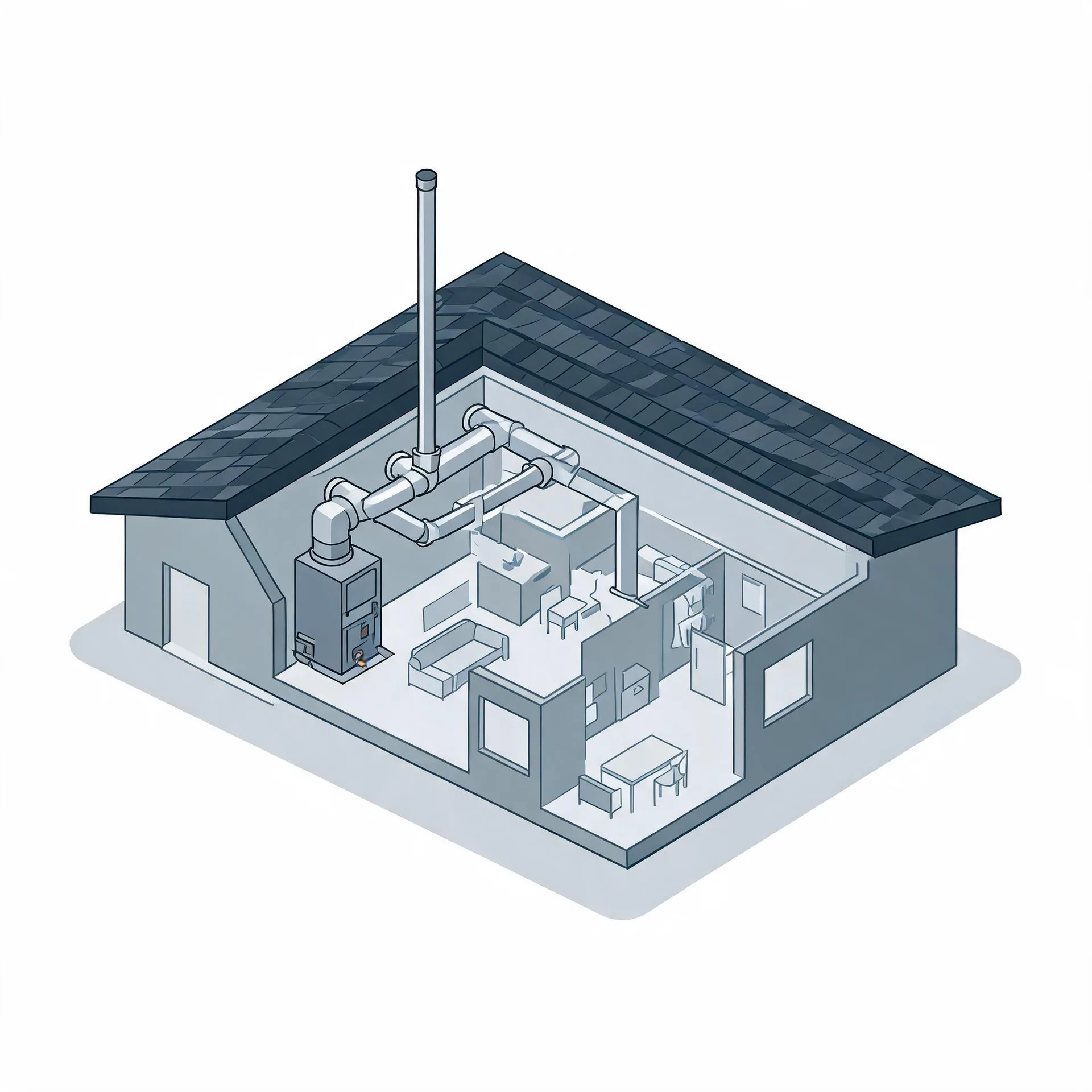
The furnace itself sits inside the house, almost always in a basement, utility room, or closet. It is the box that generates heat. Bolted to it is the air handler, which holds the blower that pushes conditioned air into the duct system every time a heating cycle runs.
The flue pipe runs from the furnace up and out of the house, carrying combustion exhaust away from the living space. Alongside the furnace, the contractor also sets the thermostat, which is the control point mounted on a wall where the homeowner sets temperatures and schedules.
The drawing shows a typical layout, and a licensed contractor determines what applies to your specific house.
Find a contractor in Hillsdale CountyHillsdale County, by the numbers
77 severe weather events were recorded in Hillsdale County, Michigan between 2015 and 2024.
NOAA National Centers for Environmental Information, Storm Events Database, bulk CSV export, events 2015-01-01 through 2024-12-31.Half the homes in Hillsdale County, Michigan were built in 1971 or earlier (2020-2024 ACS 5-year).
U.S. Census Bureau, 2020-2024 American Community Survey 5-Year EstimatesHillsdale County, Michigan holds 21,515 housing units (2020-2024 ACS 5-year).
U.S. Census Bureau, 2020-2024 American Community Survey 5-Year EstimatesOwners occupy 82.0% of the occupied homes in Hillsdale County, Michigan (2020-2024 ACS 5-year).
U.S. Census Bureau, 2020-2024 American Community Survey 5-Year EstimatesFurnace Installation Rules for Hillsdale County, Michigan6 sourced standards and codes
What happens when the contractor arrives
Non-weatherized gas furnaces manufactured on or after November 19, 2015 must reach 80.0 percent AFUE.
Non-weatherized oil-fired furnaces manufactured on or after November 19, 2015 must reach 83.0 percent AFUE.
Mobile home gas furnaces manufactured on or after November 19, 2015 must reach 80.0 percent AFUE.
Non-weatherized gas furnaces manufactured on or after December 18, 2028 must reach 95.0 percent AFUE, up from the 80.0 percent minimum that applies to units manufactured before that date.
Licensing Rules for HVAC Work in Hillsdale County, Michigan
Michigan issues the mechanical contractor’s licence by classification: HVAC equipment, ductwork, refrigeration, hydronic heating and cooling, and limited or unlimited heating and refrigeration service are each a separate classification a contractor has to hold.
Michigan requires a mechanical contractor’s licence: nobody may install, alter or service the regulated mechanical work unless they, or an employee, hold a licence from the department that has not been revoked or suspended.
Severe Weather Events in Hillsdale County
Michigan winters put real strain on heating equipment, and the load a furnace carries is shaped by what the local climate actually does. How hard your system has to work, and how long it holds up, is a local question.
77 severe weather events, 2015–2024. Source: NOAA National Centers for Environmental Information, Storm Events Database.