Tell us about the job
Takes about a minute. No obligation.
Sizing a furnace for a house in Gogebic County starts with what the climate actually asks of a heating system, not with catalog defaults. 111 severe weather events were recorded in Gogebic County, Michigan between 2015 and 2024. Severe weather at that rate means the load a furnace carries here is a genuine engineering input, and a contractor who treats it as background noise will undersize the equipment or skip installation details that matter in hard winters. Duct sealing, venting clearances, and combustion air supply all behave differently under sustained cold-weather demand. A contractor working this area accounts for that before the unit goes in.
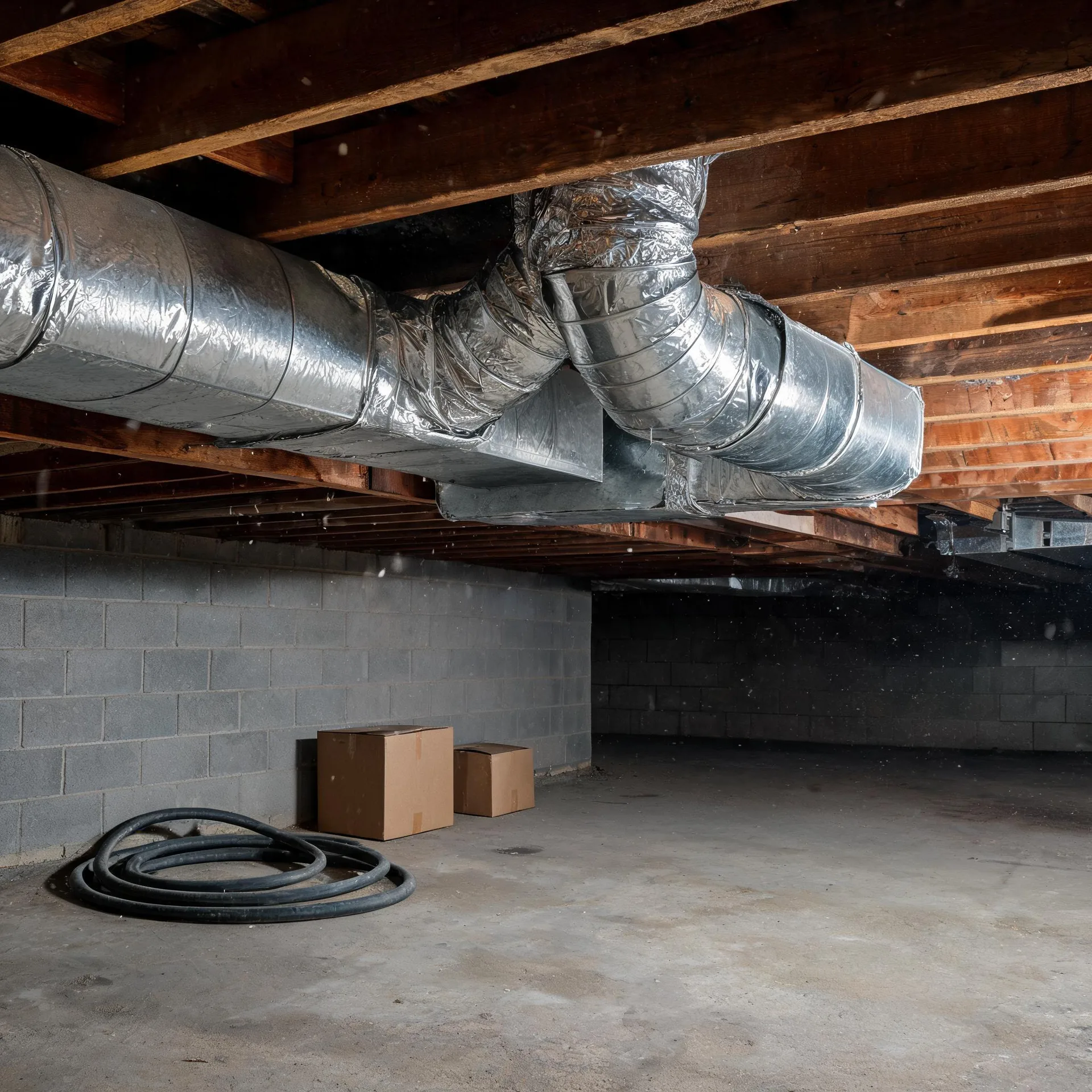
Ductwork laid out for older heating equipment carries assumptions about airflow, trunk sizing, and register placement that a modern furnace does not share. Half the homes in Gogebic County, Michigan were built in 1955 or earlier (2020-2024 ACS 5-year). A contractor pricing a furnace installation here measures what those ducts can actually move before settling on a unit, because a system matched to the wrong distribution network runs short of its rated output and cycles in ways that drive up energy bills and wear. The electrical service matters too, but ductwork is where the quote changes.
What Gets Installed With a New Furnace
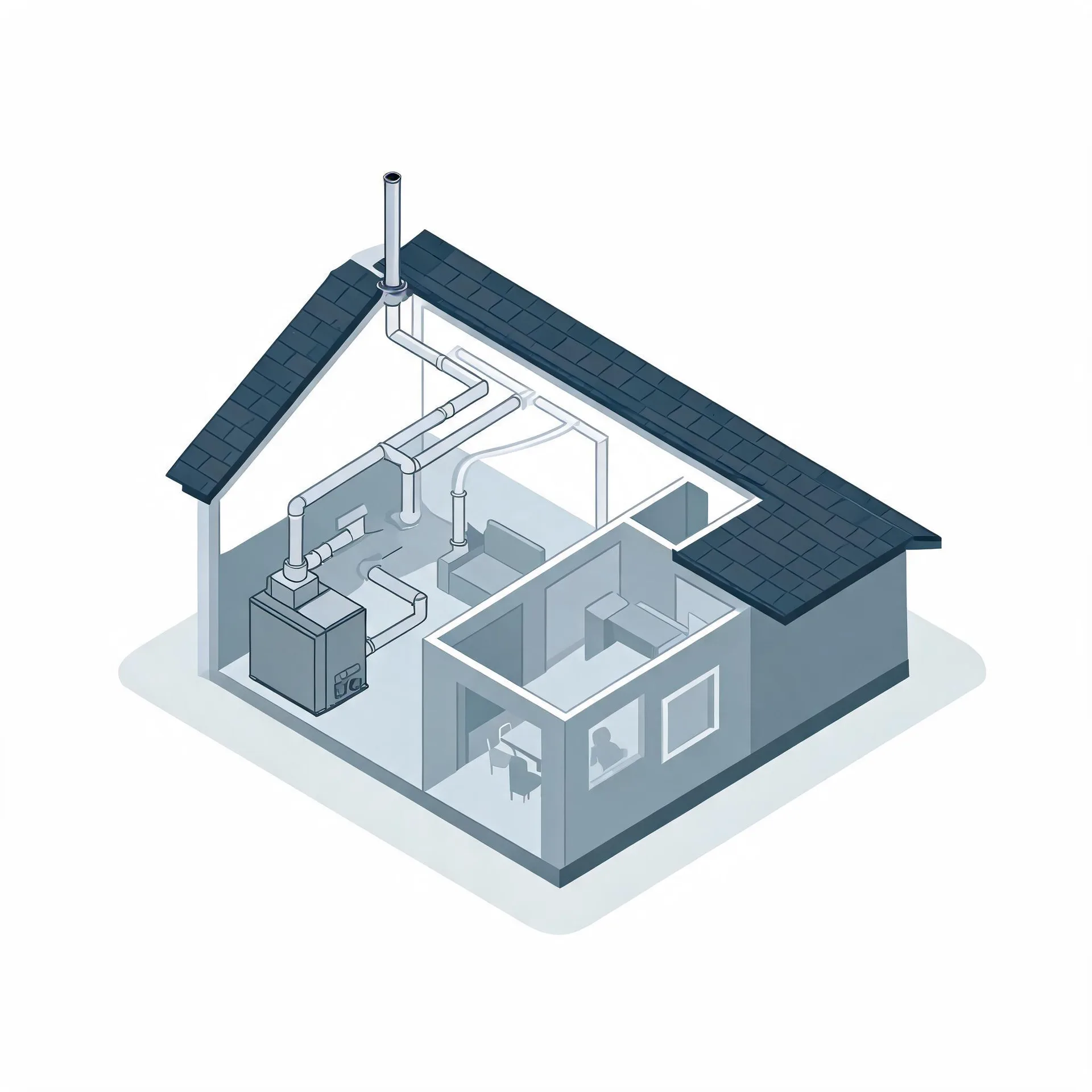
The furnace itself sits in a basement, utility room, or closet and is the core unit a contractor sets in place. Attached to it is the flue pipe, which exits through the wall or roof and carries combustion gases out of the house. The gas line connects directly to the unit to feed it fuel.
The air handler, which may be built into the furnace cabinet or mounted alongside it, moves conditioned air into the duct system. The thermostat mounts on an interior wall and is the control point the homeowner touches. A contractor also sets the condensate drain line where the unit's specifications require one.
The drawing shows a typical layout, and a licensed contractor determines exactly what applies to your home's configuration.
Find a contractor in Gogebic CountyGogebic County, by the numbers
111 severe weather events were recorded in Gogebic County, Michigan between 2015 and 2024.
NOAA National Centers for Environmental Information, Storm Events Database, bulk CSV export, events 2015-01-01 through 2024-12-31.Half the homes in Gogebic County, Michigan were built in 1955 or earlier (2020-2024 ACS 5-year).
U.S. Census Bureau, 2020-2024 American Community Survey 5-Year EstimatesGogebic County, Michigan holds 10,394 housing units (2020-2024 ACS 5-year).
U.S. Census Bureau, 2020-2024 American Community Survey 5-Year EstimatesOwners occupy 81.0% of the occupied homes in Gogebic County, Michigan (2020-2024 ACS 5-year).
U.S. Census Bureau, 2020-2024 American Community Survey 5-Year EstimatesFurnace Installation Rules on the Books for Gogebic County, Michigan6 codes, standards, and laws
What HVAC Installation Looks Like in Gogebic County
Non-weatherized gas furnaces manufactured on or after November 19, 2015 must reach 80.0 percent AFUE.
Non-weatherized oil-fired furnaces manufactured on or after November 19, 2015 must reach 83.0 percent AFUE.
Mobile home gas furnaces manufactured on or after November 19, 2015 must reach 80.0 percent AFUE.
Non-weatherized gas furnaces manufactured on or after December 18, 2028 must reach 95.0 percent AFUE, up from the 80.0 percent minimum that applies to units manufactured before that date.
Licensing and Legal Requirements in Gogebic County, Michigan
Michigan issues the mechanical contractor’s licence by classification: HVAC equipment, ductwork, refrigeration, hydronic heating and cooling, and limited or unlimited heating and refrigeration service are each a separate classification a contractor has to hold.
Michigan requires a mechanical contractor’s licence: nobody may install, alter or service the regulated mechanical work unless they, or an employee, hold a licence from the department that has not been revoked or suspended.
Severe Weather History in Gogebic County
Heating equipment in this part of Michigan works against whatever the climate throws at it, year after year. How hard that load runs, and how well the equipment holds up, is shaped by local conditions.
111 severe weather events, 2015–2024. Source: NOAA National Centers for Environmental Information, Storm Events Database.