Tell us about the job
Takes about a minute. No obligation.
A contractor quoting a furnace installation in Saginaw County starts by working out what the system will actually run against, because the weather here is not an occasional variable. 110 severe weather events were recorded in Saginaw County, Michigan between 2015 and 2024. At that rate, every new furnace goes into a house that will ask it to work hard and hold there, which means duct sizing, equipment capacity, and the quality of every sealed connection carry more weight than they would somewhere the winters were gentler and the storms fewer. A unit installed loose to spec on paper will show the gap before long.
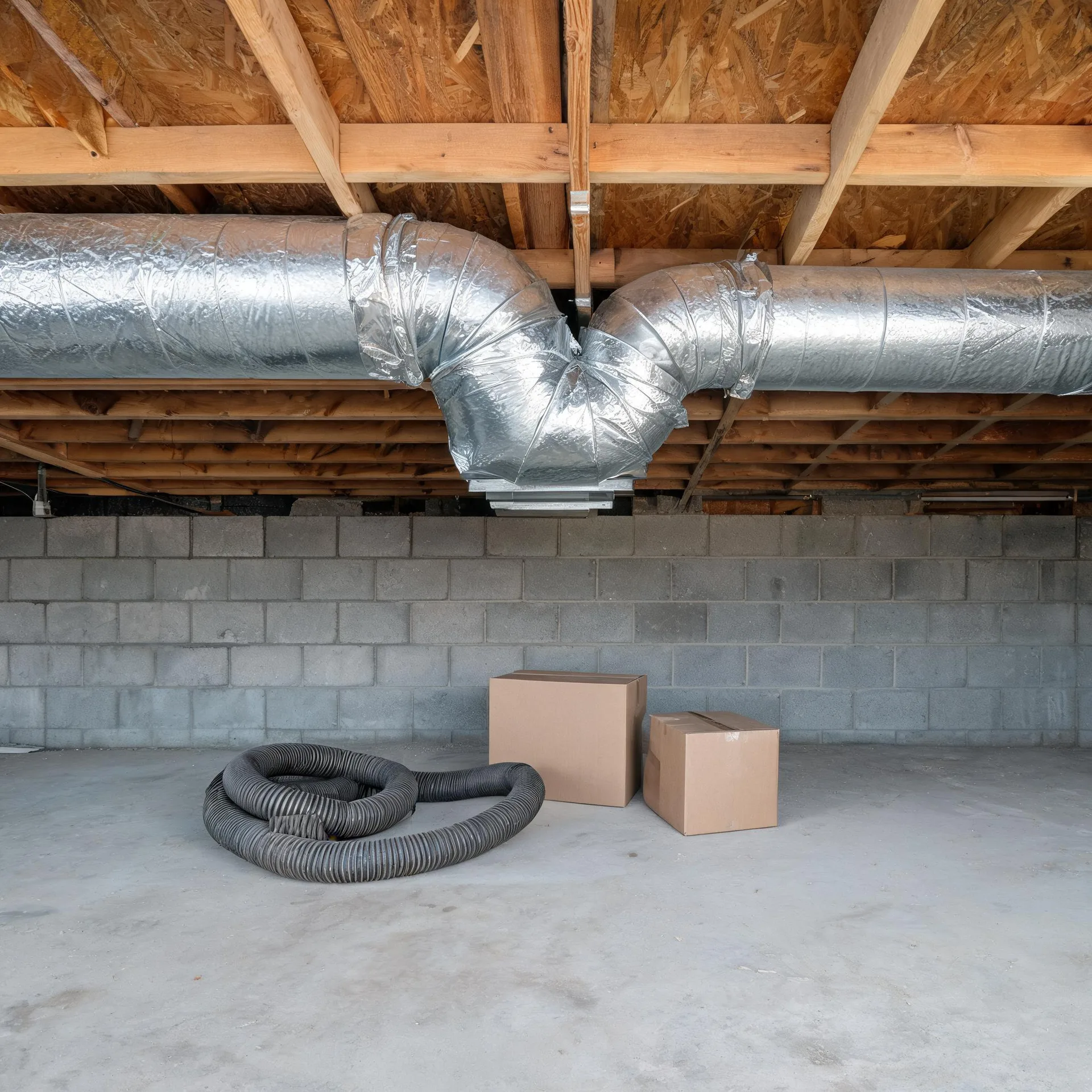
Ductwork laid into a house decades before today's furnaces existed was sized and routed for different equipment entirely, and that gap is what a contractor has to resolve before the new unit matters. Half the homes in Saginaw County, Michigan were built in 1968 or earlier (2020-2024 ACS 5-year). A furnace that is correctly sized for the house will still underperform if the duct system cannot move the air the equipment calls for. The contractor's first task is measuring what the existing runs can carry, finding where they restrict flow or leak, and deciding what has to change before the new furnace goes in.
What Gets Installed With a New Furnace
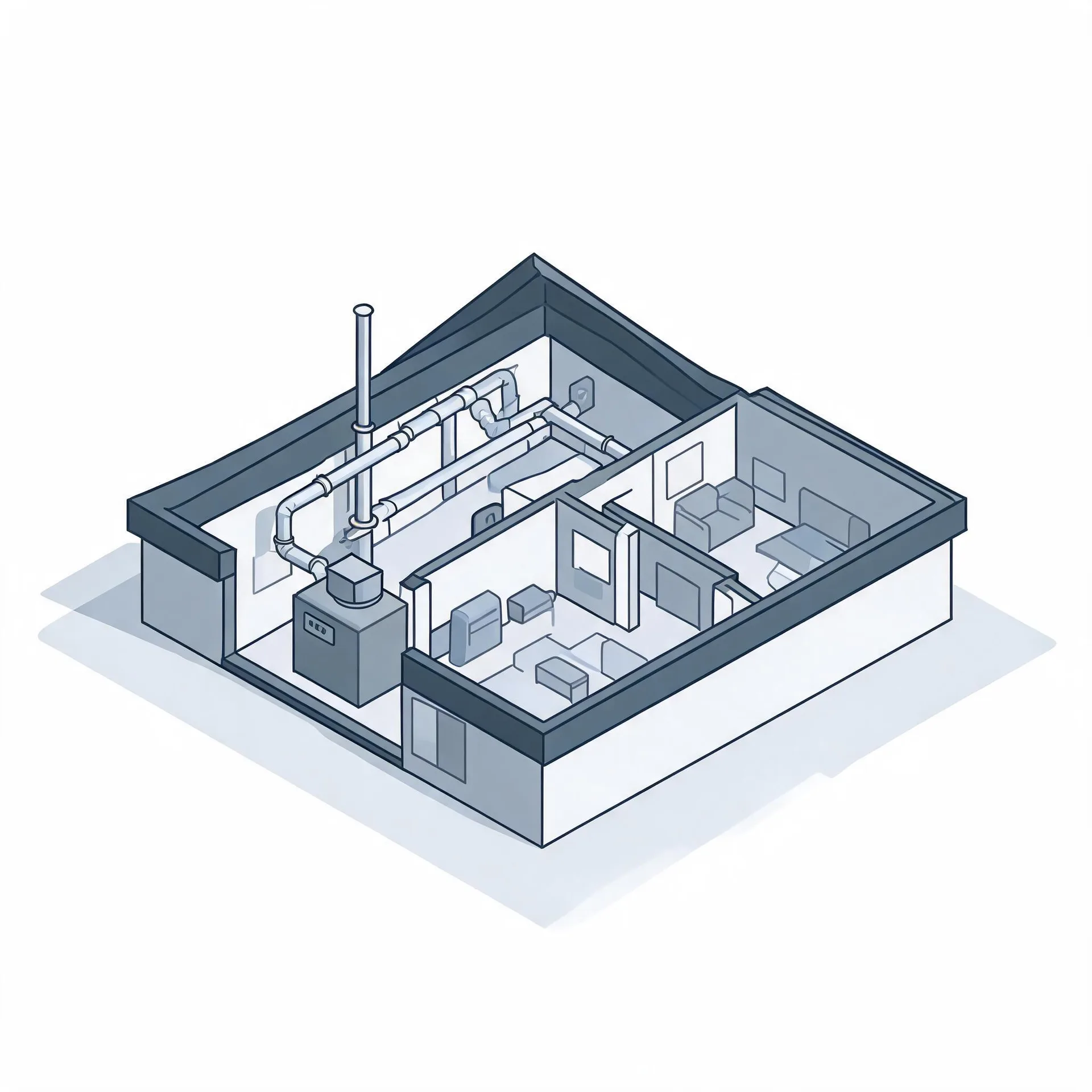
The furnace itself sits in the basement, utility room, or crawl space and is the heart of what a contractor installs. Attached to it is the flue or vent pipe, which runs from the unit to an exterior wall or through the roof to carry combustion gases out of the house.
The air handler and blower assembly live inside or directly alongside the furnace cabinet and push conditioned air into the supply side of the home. The thermostat mounts on an interior wall and is the control point that tells the furnace when to fire and when to stop.
The drawing shows a typical layout, and a licensed contractor determines exactly what applies to your house and its existing setup.
Find a contractor in Saginaw CountySaginaw County, by the numbers
110 severe weather events were recorded in Saginaw County, Michigan between 2015 and 2024.
NOAA National Centers for Environmental Information, Storm Events Database, bulk CSV export, events 2015-01-01 through 2024-12-31.Half the homes in Saginaw County, Michigan were built in 1968 or earlier (2020-2024 ACS 5-year).
U.S. Census Bureau, 2020-2024 American Community Survey 5-Year EstimatesSaginaw County, Michigan holds 86,208 housing units (2020-2024 ACS 5-year).
U.S. Census Bureau, 2020-2024 American Community Survey 5-Year EstimatesOwners occupy 74.1% of the occupied homes in Saginaw County, Michigan (2020-2024 ACS 5-year).
U.S. Census Bureau, 2020-2024 American Community Survey 5-Year EstimatesCodes & Standards Governing Furnace Installation in Saginaw County, Michigan6 sourced rules and standards
What the installation looks like
Non-weatherized gas furnaces manufactured on or after November 19, 2015 must reach 80.0 percent AFUE.
Non-weatherized oil-fired furnaces manufactured on or after November 19, 2015 must reach 83.0 percent AFUE.
Mobile home gas furnaces manufactured on or after November 19, 2015 must reach 80.0 percent AFUE.
Non-weatherized gas furnaces manufactured on or after December 18, 2028 must reach 95.0 percent AFUE, up from the 80.0 percent minimum that applies to units manufactured before that date.
Licensing Rules for HVAC Work in Saginaw County, Michigan
Michigan issues the mechanical contractor’s licence by classification: HVAC equipment, ductwork, refrigeration, hydronic heating and cooling, and limited or unlimited heating and refrigeration service are each a separate classification a contractor has to hold.
Michigan requires a mechanical contractor’s licence: nobody may install, alter or service the regulated mechanical work unless they, or an employee, hold a licence from the department that has not been revoked or suspended.
Severe Weather Events in Saginaw County
What the weather demands of a furnace here shapes what equipment makes sense and how hard it has to work. Installation decisions that hold up in Saginaw County start with knowing what this area actually puts on a system.
110 severe weather events, 2015–2024. Source: NOAA National Centers for Environmental Information, Storm Events Database.