Tell us about the job
Takes about a minute. No obligation.
A contractor diagnosing a furnace repair in this area is not working against a backdrop of relentless weather load. 55 severe weather events were recorded in Manistee County, Michigan between 2015 and 2024. At that rate, severe weather is something a system here encounters now and then, not a grinding season-after-season pressure on its heat exchanger, blower motor, or controls. When a furnace fails in Manistee County, the contractor's first question runs toward how old the equipment is and how well it was installed, because the weather record alone does not account for the wear they find.
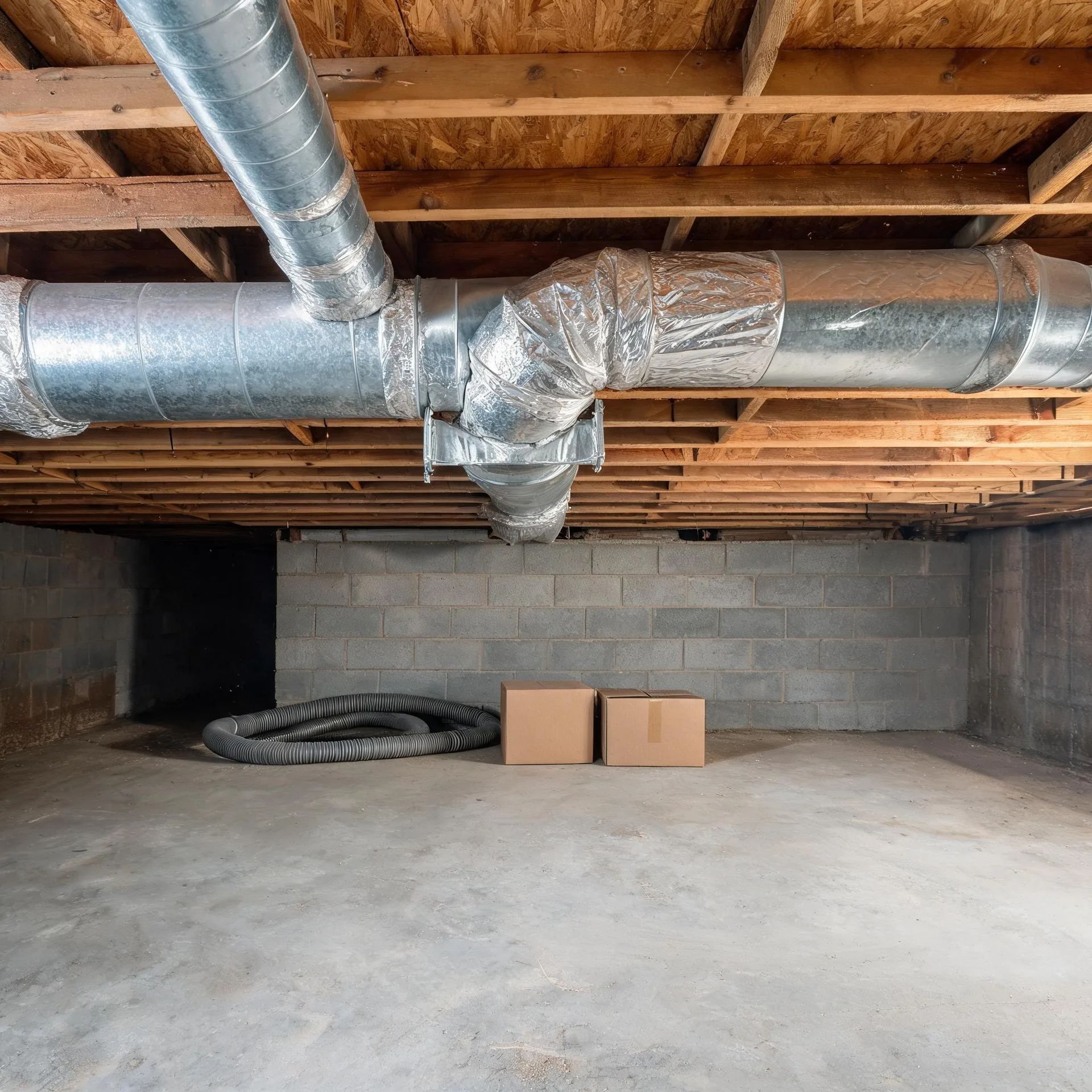
Ductwork and wiring in houses this old were sized for equipment that no longer exists. Half the homes in Manistee County, Michigan were built in 1972 or earlier (2020-2024 ACS 5-year). When a contractor opens a furnace here, the question of whether the failed part is still manufactured shapes what the repair actually costs and whether it stays a repair at all. A substitute part that fits the space but runs at a different draw or pressure changes the scope of the job before anyone has picked up a wrench.
The Parts of a Furnace a Contractor Checks First
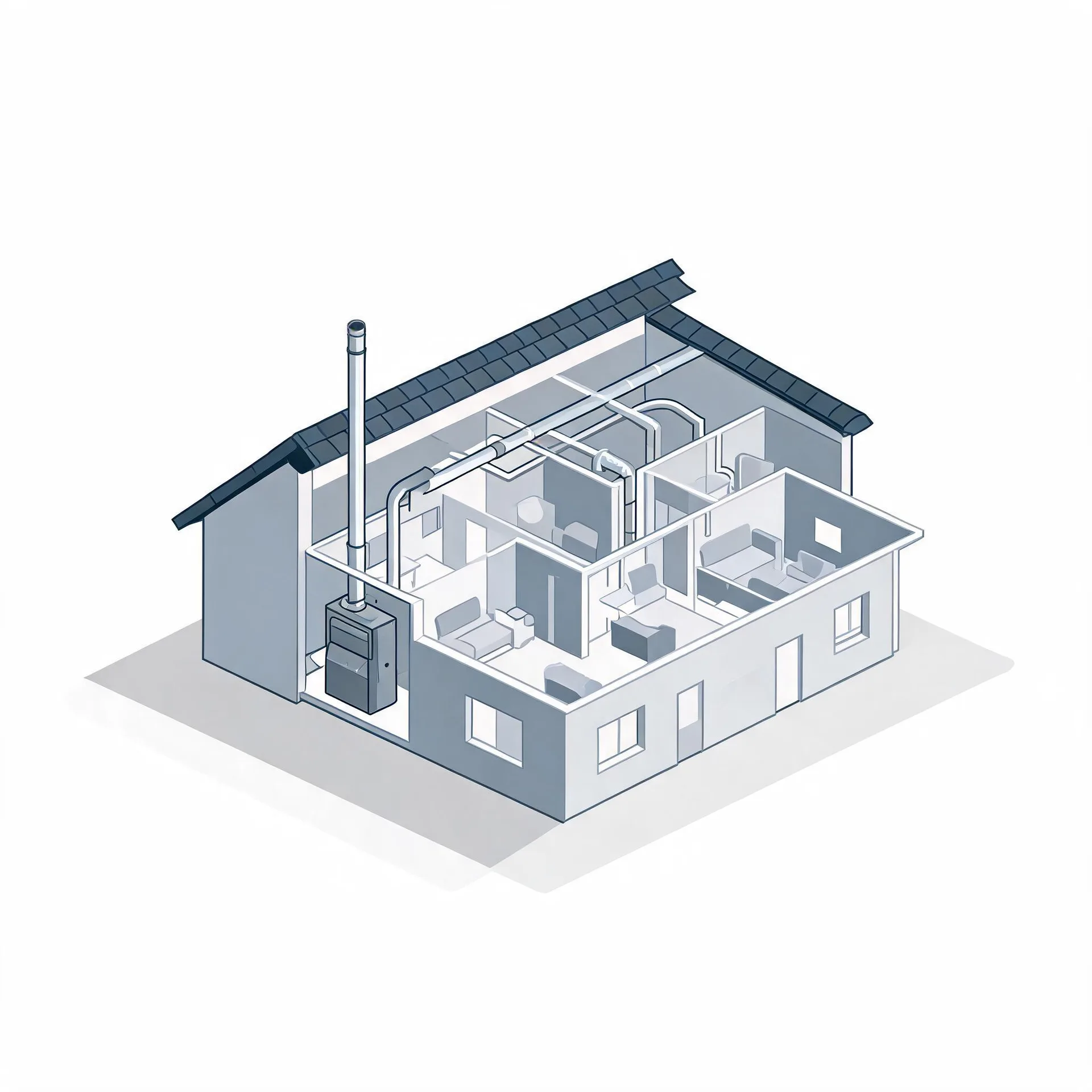
The furnace itself sits in the basement, utility room, or closet and is the part doing the actual work. Inside it, the heat exchanger and burner assembly are where a contractor looks first when heat is missing or the system is cycling oddly. A cracked heat exchanger or a burner that won't stay lit accounts for many of the calls a technician walks into.
The blower motor pushes conditioned air out through the supply side and sits inside the furnace cabinet. The flue pipe runs from the top of the furnace up and out of the house, carrying combustion gases away. The control board ties all of it together, and a fault there can look like almost anything else has failed.
The drawing shows a typical furnace layout, and a licensed contractor determines which components apply to your specific system.
Get matched in Manistee CountyManistee County by the numbers
55 severe weather events were recorded in Manistee County, Michigan between 2015 and 2024.
NOAA National Centers for Environmental Information, Storm Events Database, bulk CSV export, events 2015-01-01 through 2024-12-31.Half the homes in Manistee County, Michigan were built in 1972 or earlier (2020-2024 ACS 5-year).
U.S. Census Bureau, 2020-2024 American Community Survey 5-Year EstimatesManistee County, Michigan holds 15,713 housing units (2020-2024 ACS 5-year).
U.S. Census Bureau, 2020-2024 American Community Survey 5-Year EstimatesOwners occupy 85.8% of the occupied homes in Manistee County, Michigan (2020-2024 ACS 5-year).
U.S. Census Bureau, 2020-2024 American Community Survey 5-Year EstimatesCodes & Standards Behind Furnace Repair in Manistee County, Michigan6 rules & standards
What the repair visit looks like
Non-weatherized gas furnaces manufactured on or after November 19, 2015 must reach 80.0 percent AFUE.
Non-weatherized oil-fired furnaces manufactured on or after November 19, 2015 must reach 83.0 percent AFUE.
Mobile home gas furnaces manufactured on or after November 19, 2015 must reach 80.0 percent AFUE.
Non-weatherized gas furnaces manufactured on or after December 18, 2028 must reach 95.0 percent AFUE, up from the 80.0 percent minimum that applies to units manufactured before that date.
Licensing and Legal Requirements in Manistee County, Michigan
Michigan issues the mechanical contractor’s licence by classification: HVAC equipment, ductwork, refrigeration, hydronic heating and cooling, and limited or unlimited heating and refrigeration service are each a separate classification a contractor has to hold.
Michigan requires a mechanical contractor’s licence: nobody may install, alter or service the regulated mechanical work unless they, or an employee, hold a licence from the department that has not been revoked or suspended.
Severe Weather Events in Manistee County, Year by Year
Furnaces in Manistee County work against whatever the local climate throws at them, and that workload shapes how hard the equipment runs and how fast parts wear. Weather history here is part of understanding why repair needs look the way they do.
55 severe weather events, 2015–2024. Source: NOAA National Centers for Environmental Information, Storm Events Database.