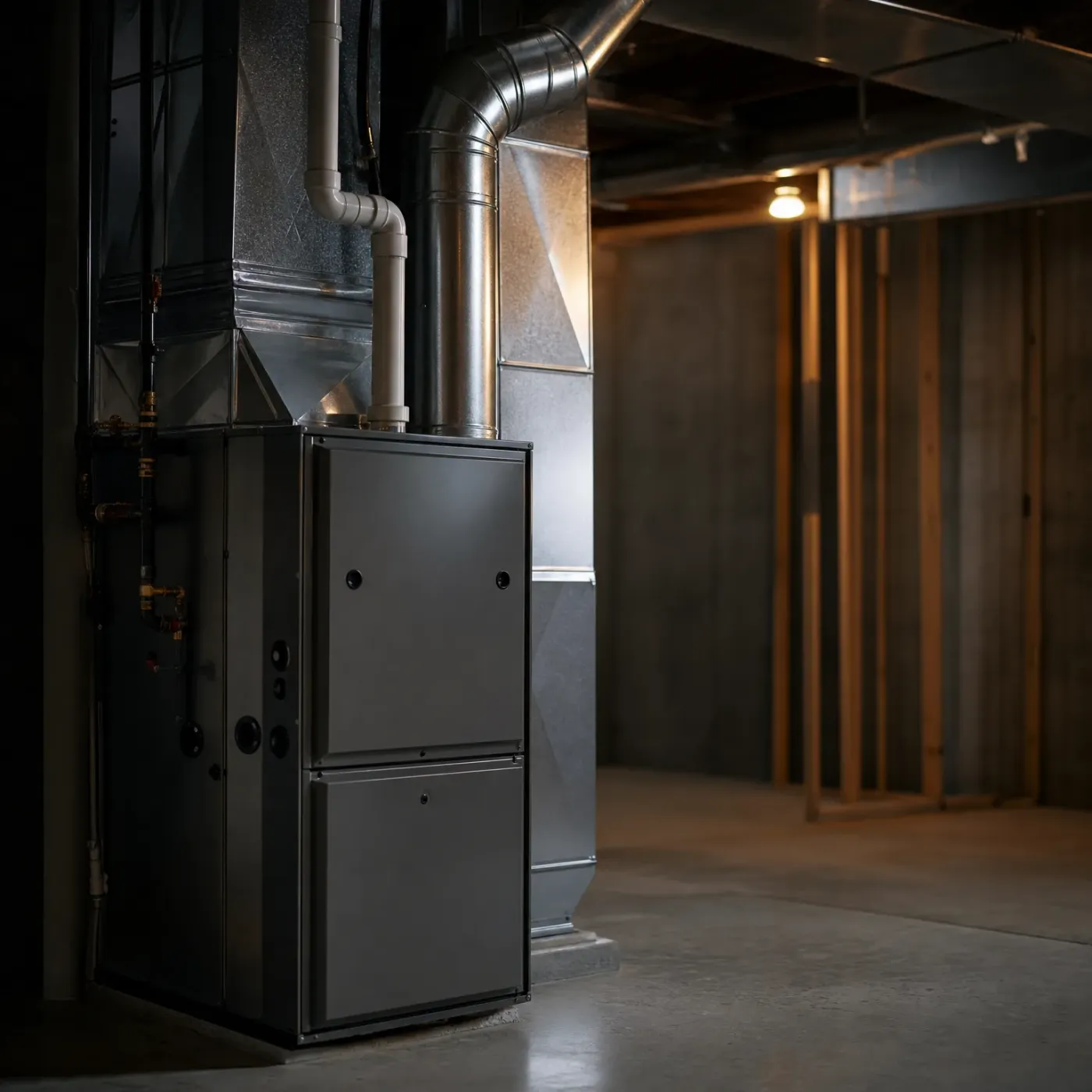




A dark gray furnace with two access panels stands in a basement, connected to galvanized sheet-metal ductwork and PVC pipes, with exposed wood framing and a bare bulb light in the background.

Send one request and you're done looking

How long a furnace lasts in Michigan

Most furnaces in Michigan run 15 to 20 years before they need to be replaced, but what's left in yours depends on how it's been maintained and what shape the heat exchanger and igniter are in right now. This page gets into what actually determines that number for a furnace working through Michigan winters. When you're ready, skip the search and the phone calls and let the form bring the installer to you.

Hand it off

A furnace in Michigan typically lasts 15 to 20 years. Yours runs from about October through April, sometimes longer when spring stays cold, and that long stretch of hard use every year is what wears it down. The heat exchanger cracks with age, the igniter weakens, and the blower motor works harder as dust builds up in places you can't see. A furnace that's been serviced every year and kept clean inside tends to make it to the far end of that range. One that's been ignored, or one that's been short-cycling for a while, can fail well short of it. Where yours falls depends on its age, how it's been maintained, and whether it's started acting up already: trouble lighting, strange smells, rooms that won't heat evenly. If you're not sure how many winters it has left, that's worth finding out before the cold sets in and you're without heat on the night you need it most.

A man in a blue sweatshirt reclines with closed eyes in a brown leather armchair in a living room with a bookshelf, houseplant, sofa, window, and a side table holding newspapers and a dark mug.
A bearded man in a gray pullover reclines with closed eyes on a brown leather sofa in a sunlit room with a window, framed picture, potted plant, and a wooden cabinet holding papers and a dark mug.
A man in a gray sweater leans back with closed eyes in a brown leather armchair beside a wooden side table holding a dark mug and a folded newspaper, with bookshelves and a window seat behind him.
A man in a green sweater reclines in an armchair with his eyes closed and a slight smile, beside a window with plants, a small table holding a mug and folded newspaper, and bookshelves behind him.

Why gas furnaces hold up this long

Gas furnaces here last as long as they do because the parts that fail first, the igniter and the flame sensor, are cheap to swap and don't take the rest of the furnace down with them. The heat exchanger is the part that ends a furnace's life. It's a sealed piece of metal that cracks after years of heating and cooling every time the burners cycle on and off. Michigan winters mean that cycle runs for months straight, October through April some years. A cracked exchanger means replacement, not repair, because it's not something a contractor can safely patch.
What cuts that number short

A furnace that gets skipped on yearly maintenance tends to fall well short of 15 years. Dust and debris build up on the burners and in the blower, which makes the whole system work harder to push the same amount of heat through your ducts. That strain is what cracks a heat exchanger early or burns out an igniter years before it should fail. A furnace that's been serviced every year, filter changed on schedule, often runs past 20. One that hasn't been touched since install is a different furnace, even if it came from the same factory.

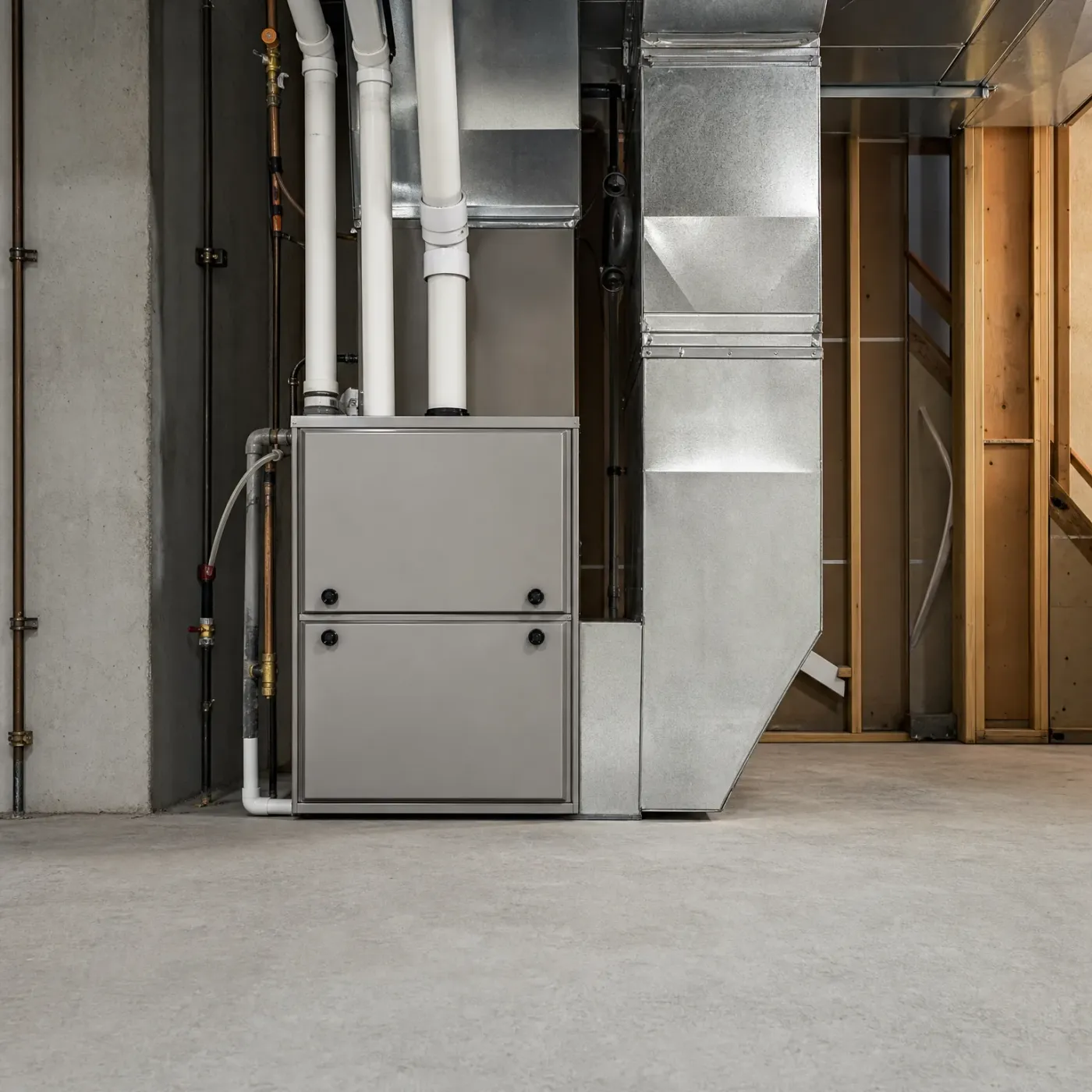
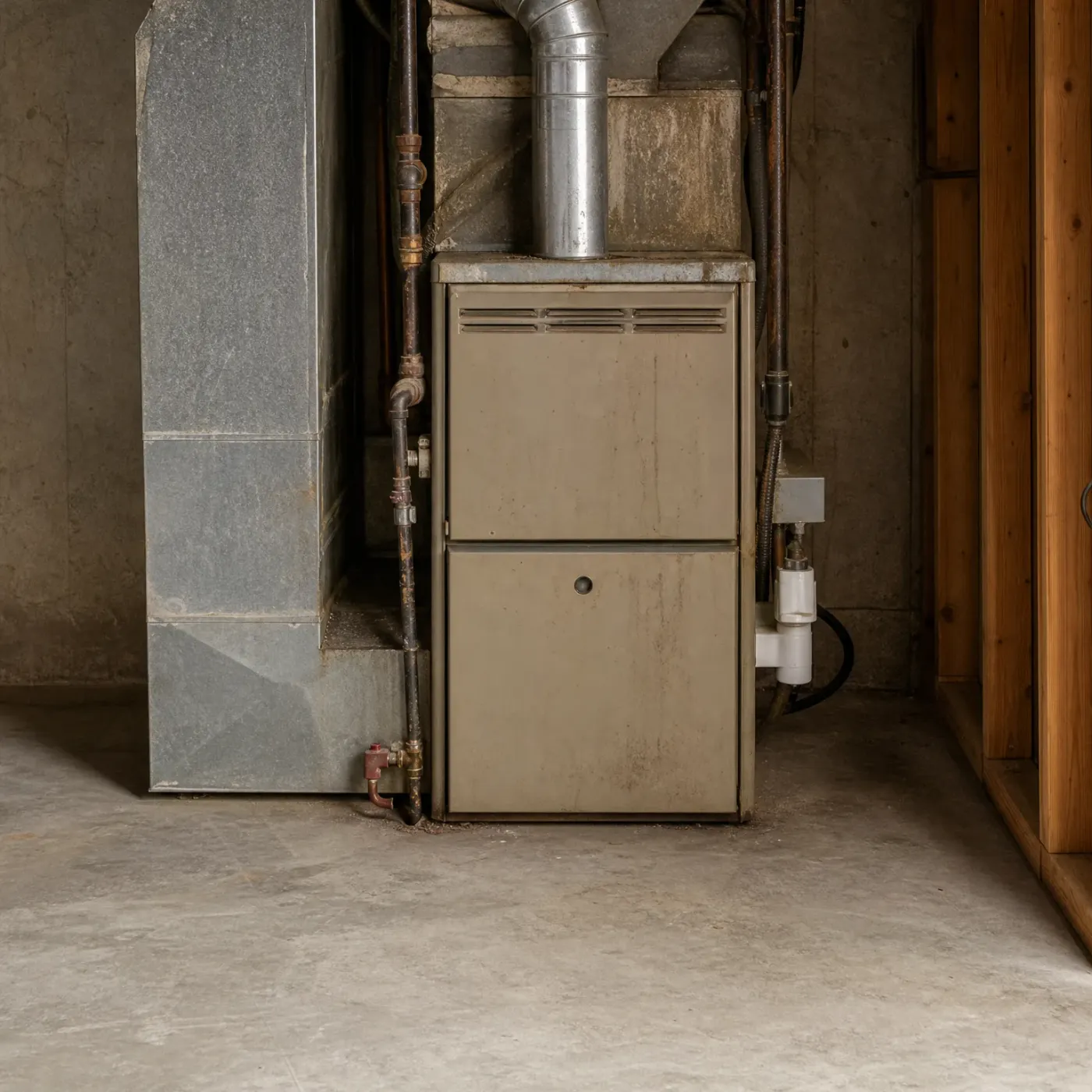
A beige residential furnace stands on a concrete basement floor beside galvanized sheet-metal ductwork, a round flue pipe, copper gas piping, and a PVC condensate line, with a wood-paneled wall at right.
Before you get your furnace installation
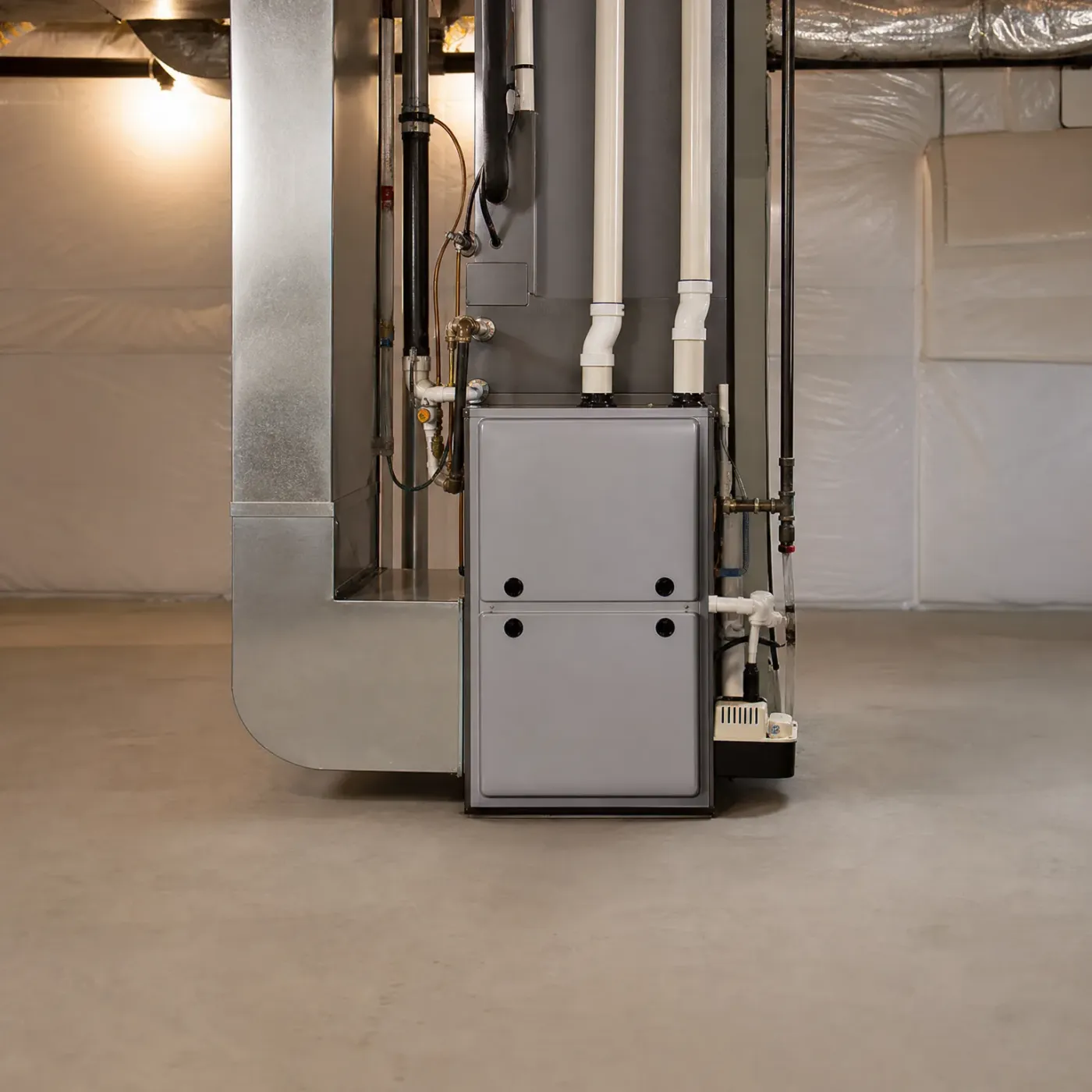
A gray high-efficiency furnace in a basement with white PVC vent pipes, sheet-metal ductwork, copper and black piping, a condensate pump, and insulated walls above a concrete floor.
After you get your furnace installation

Every cycle follows the same order. The inducer motor kicks on first to clear the exhaust path, the igniter heats up, the gas valve opens, and the flame sensor has to confirm a flame within a few seconds or the valve shuts back down. That's why a dirty flame sensor looks like a furnace that keeps starting and stopping rather than one that just won't fire. Behind that sequence is the heat exchanger, a sealed chamber that keeps combustion gas away from the air your ducts send through the house. Once it cracks, that separation is gone, which is why it's the part that ends a furnace's life rather than getting patched. What happens to that exhaust depends on the furnace's age. Units built after the mid 1990s condense it and drain it out through PVC pipe, older ones send it straight up a metal flue. The circuit board runs the whole startup sequence, so when it starts failing you tend to see random lockouts instead of one clear problem. Even how you run the thermostat matters. Dropping it overnight and raising it again in the morning means more startup cycles, and more wear on the igniter, than leaving it alone.

How a furnace actually runs

  • A furnace fires in a set sequence: the inducer motor starts, the igniter glows, the gas valve opens, and the flame sensor confirms a flame within seconds.
  • If the flame sensor doesn't detect current through the flame, it shuts the gas valve back off, which is why a dirty sensor shows up as a furnace that starts and stops instead of a furnace that won't start at all.
  • The heat exchanger is a sealed chamber that keeps combustion gas separate from the air blown into your rooms, and once it cracks, that separation is gone.
  • Furnaces built after the mid 1990s condense the exhaust and drain it through PVC pipe, while older units vent hot exhaust straight up a metal flue.
  • The circuit board times every step of that startup sequence, so a board that's failing often shows up as random lockouts rather than one clear symptom.
  • A thermostat set low overnight and raised in the morning makes the furnace run longer startup cycles more often, which is harder on the igniter than one long steady run.
A gray high-efficiency furnace stands on a concrete basement floor beside galvanized sheet-metal ductwork, white PVC vent pipes, copper and black piping, and unfinished wood stud framing.
A furnace running right pulls air evenly through the return and sends it back out warm, with no scorched smell and no soot at the cabinet seams.
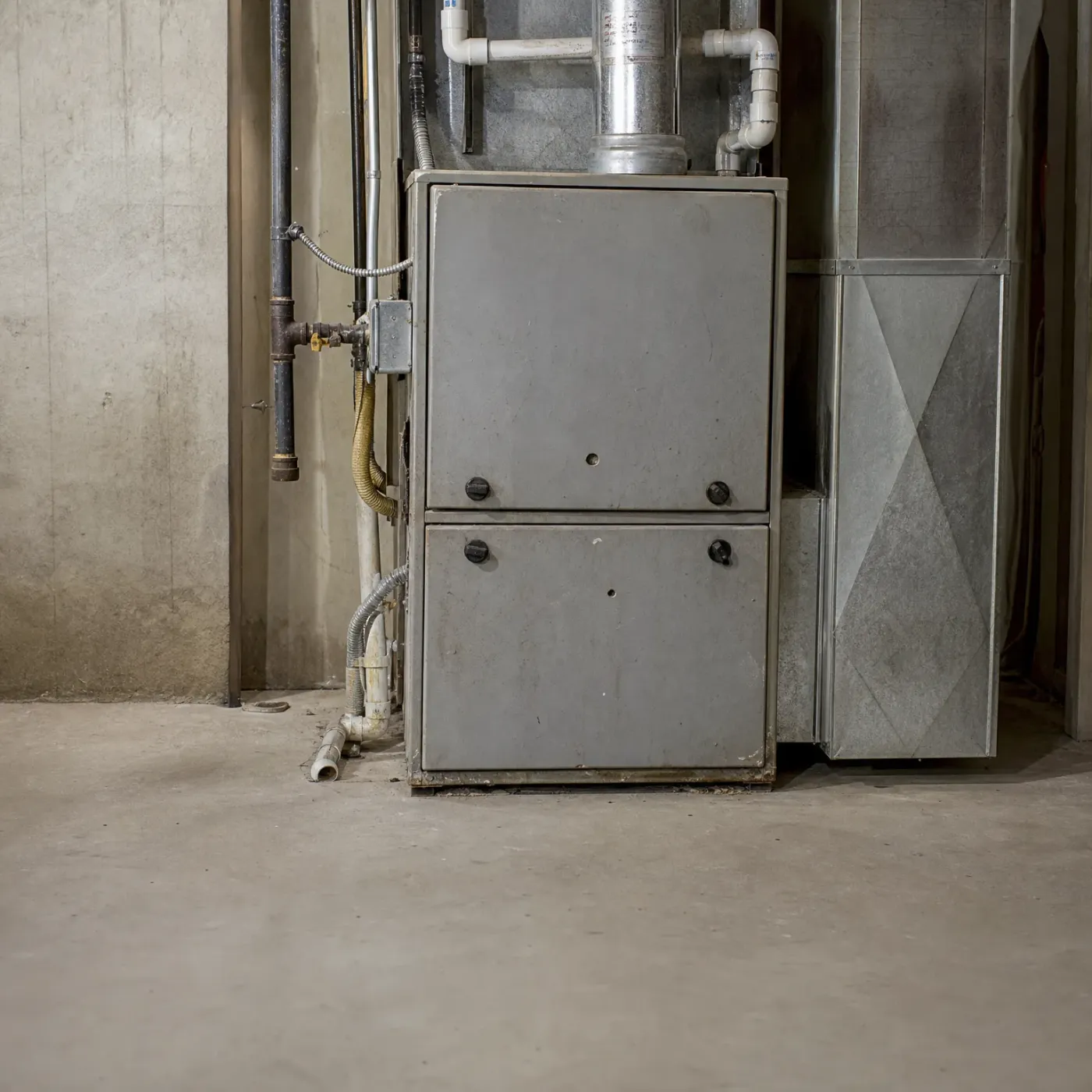
A gray furnace with two access panels stands on a concrete basement floor beside sheet-metal ductwork, with pipes, flexible conduit and an electrical box on the concrete wall to the left.
A furnace in trouble shows it at the panels: a burner that won't stay lit, short cycling, or a flame that burns yellow instead of blue.
  1. Thermostat calls for heat and signals the control board

  2. Inducer motor starts and purges leftover gas from the heat exchanger

  3. Pressure switch confirms the inducer is running before ignition starts

  4. Igniter heats up or sparks to prepare for the gas valve opening

An older man with gray hair and a beard leans back on a beige sofa with his eyes closed, in a sunlit room with potted plants, a wicker chair and large windows behind him.
A woman in a cream knit sweater sits in an armchair with her eyes closed and a slight smile, beside an open window showing orange autumn foliage, with a mug, books and a lit candle on a small side table.

Finding a pro stops being your job

A furnace near the end of its 15 to 20 years doesn't quit all at once. You get a winter where it short cycles, a spring where the burner won't stay lit, a few hundred dollars into a repair before you start wondering if the next one will cost more than just replacing it does. That's the point where most people start calling around, explaining the same symptoms to three or four contractors, waiting on quotes that show up days apart and don't even list the same work. With gas prices what they are and winter here running long, a furnace that's failing isn't something to sit with while you sort through that. Send the request once and the finding part is done. You're not calling anyone, you're not comparing bids on your own, you're not explaining the igniter problem again to the next person who picks up. You go back to the thing you actually need, which is heat that holds through a Michigan winter.

What a dying furnace does to your house

A furnace on its way out doesn't just stop heating. Rooms farthest from the furnace go cold first while the thermostat still reads warm, because the system can't push heat as far as it used to. You notice the bedroom over the garage or the bonus room upstairs needs a space heater to be livable. Your gas bill climbs even though you haven't changed the thermostat, since a cracked heat exchanger or a worn blower makes the furnace run longer to do the same job. Michigan winters don't leave room for a furnace that's guessing. By January, a system that's limping along is one cold snap from leaving you without heat on the night you need it most.

What replacing it now gets you back

A new furnace installed before yours fails means you're not standing in a cold house in February trying to find someone who can come out that day. You skip the part where you're calling around, explaining the same problem to three different companies, and comparing quotes while your house drops into the 50s. Submitting the form here hands that search off. You stop being the one who has to track down a contractor, and you get to wait for the work instead of scrambling for who'll do it. A furnace installed on your schedule, not an emergency one, also means you pick the unit and the timing instead of taking whatever's available that week.

Winter nights average 19°F statewide

Overnight lows in Michigan average 19°F across December, January and February. That's the stretch your furnace can't cycle off for long, and a weak heat exchanger or a tired igniter gets found out fast on nights that cold.

NOAA nClimDiv 1991-2020 county normals weighted by homes

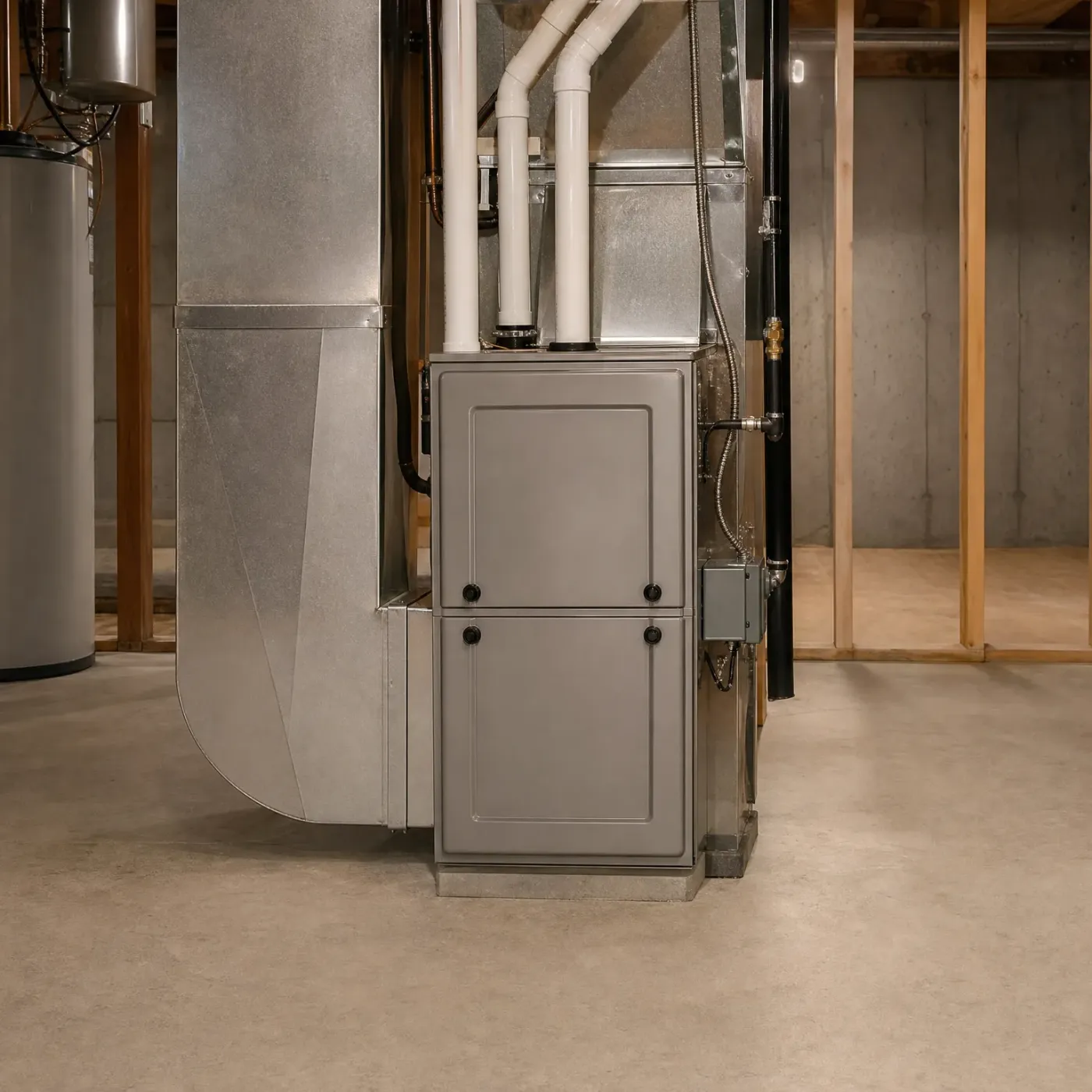
A gray high-efficiency furnace with white PVC vent pipes stands beside sheet-metal ductwork and a water heater in an unfinished basement with concrete walls and wood framing.

What a furnace still in good shape looks like

The burner lights on the first try and settles into a steady blue flame. Ductwork stays tight at the seams, the flue pipe runs clean and dry, and the basement around it smells like nothing at all. A furnace like this still has years in it.

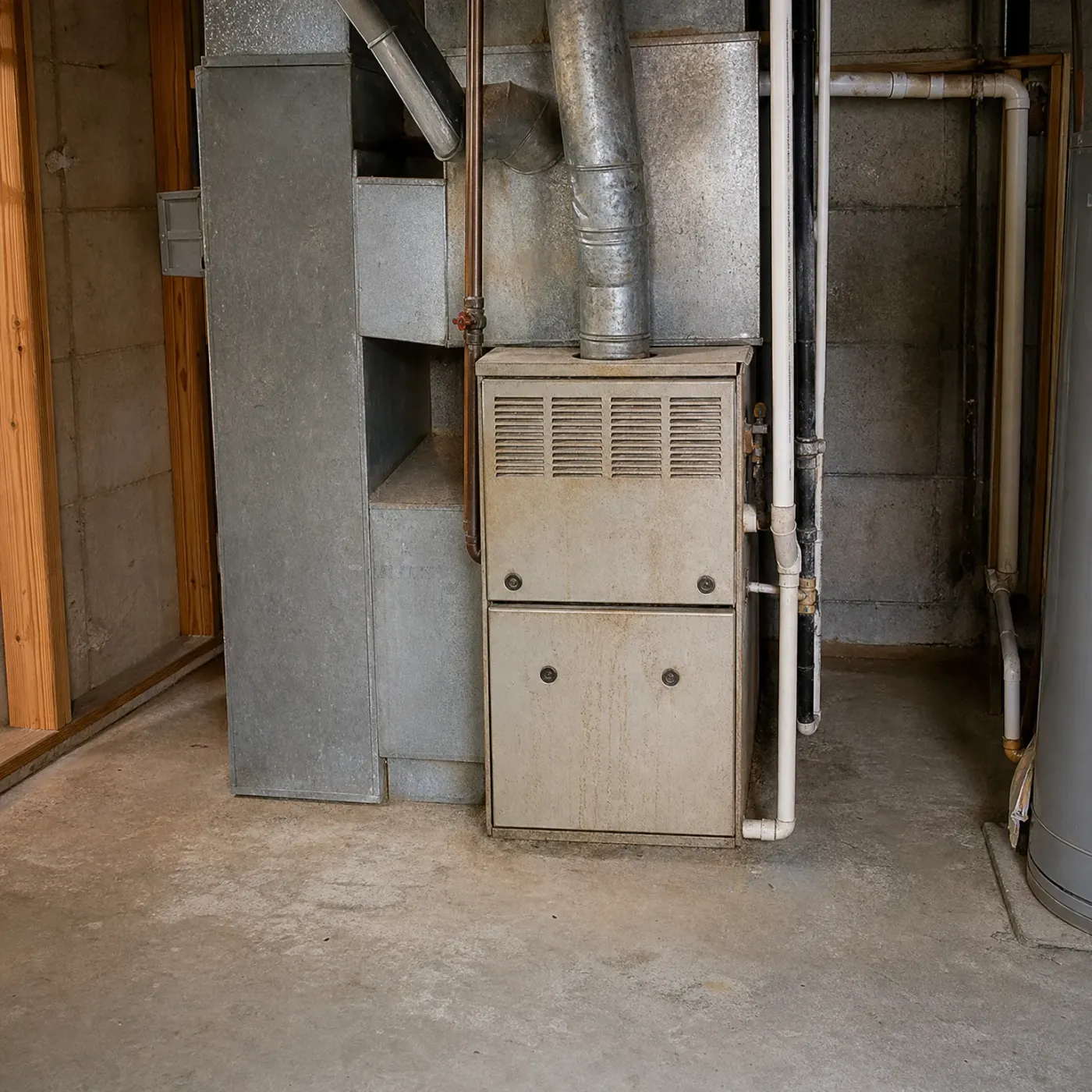
A beige gas furnace with a metal flue pipe stands in a basement against concrete block walls, beside sheet-metal ductwork, copper and white plastic pipes, and a water heater at right.

What a furnace running out of years looks like

The cabinet shows rust at the base, and the ductwork above it has seen a few seasons too many. A furnace set up like this, older, with galvanized duct and a mix of pipe generations around it, is the one worth having looked at before the cold settles in for good.

A closed silver laptop and a ceramic mug of dark coffee sit on a wooden table in front of two chair backs, with a kitchen counter, tiled backsplash, wooden cutting boards, a vase of greenery and a potted plant by a window behind.

So where does that leave your furnace

Fifteen to twenty years is the range. Where your furnace sits in it comes down to the heat exchanger, the igniter, and how those nights at 19°F have treated them. If it's lighting clean and holding a steady flame, you're fine. If it's short cycling or struggling to stay lit, you're closer to the end than the start.

Either way, you don't have to spend your evening finding out who's good. No scrolling through reviews, no calling three contractors and repeating the same story about the burner each time, no sitting on quotes trying to guess which one is fair. Send the form once and that part is off your plate.

A living room corner with a light beige sofa holding a textured taupe cushion, a large ceramic vase of olive branches by a window, a framed neutral artwork on the wall, and a dark bowl with stacked books in the foreground.
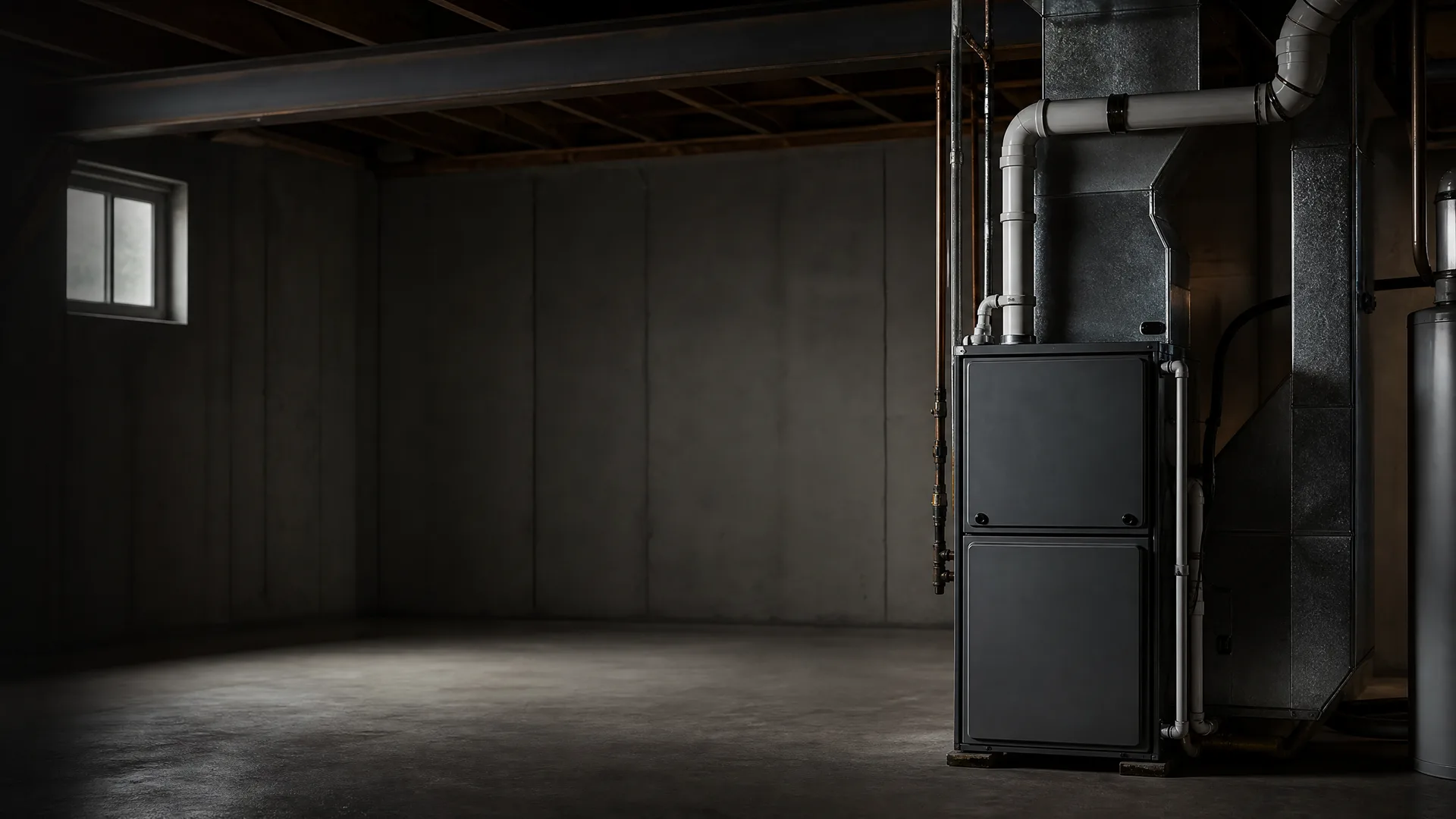
A dimly lit unfinished basement with concrete walls and floor, exposed floor joists, a small window at left, and a dark furnace with PVC venting and sheet metal ductwork at right.

Let someone else find the pro

Skip searching for a furnace pro and answer a few questions instead.

Step 1 of 3: Equipment