Profile view of a bearded man wearing a black baseball cap and a dark gray T-shirt against a plain light background.

Why your furnace is blowing cold air in Michigan

Step 1 of 3: Equipment

Why is my furnace blowing cold air in Michigan?

A furnace blowing cold air in the middle of a Michigan winter is not something you want to figure out on your own at 9pm. Most of the time it is not a sign the whole system is dying. It usually means one specific part is not doing its job, and knowing which one helps you understand what happens next.

It's probably stuck on the fan, or the igniter isn't lighting the gas

Two things cause this almost every time. Either the thermostat fan is set to "on" instead of "auto", which runs the blower constantly even when no heat is being made, or the igniter has failed and the burners never light at all, so the blower pushes room-temperature air through the vents. A cracked heat exchanger or a flame sensor covered in buildup can cause the same thing, shutting the burners off as a safety response. With gas this common across Michigan homes and electricity priced the way it is here, a furnace that runs the blower without heating costs you real money while leaving rooms cold. None of these are things to wait out through a cold snap.

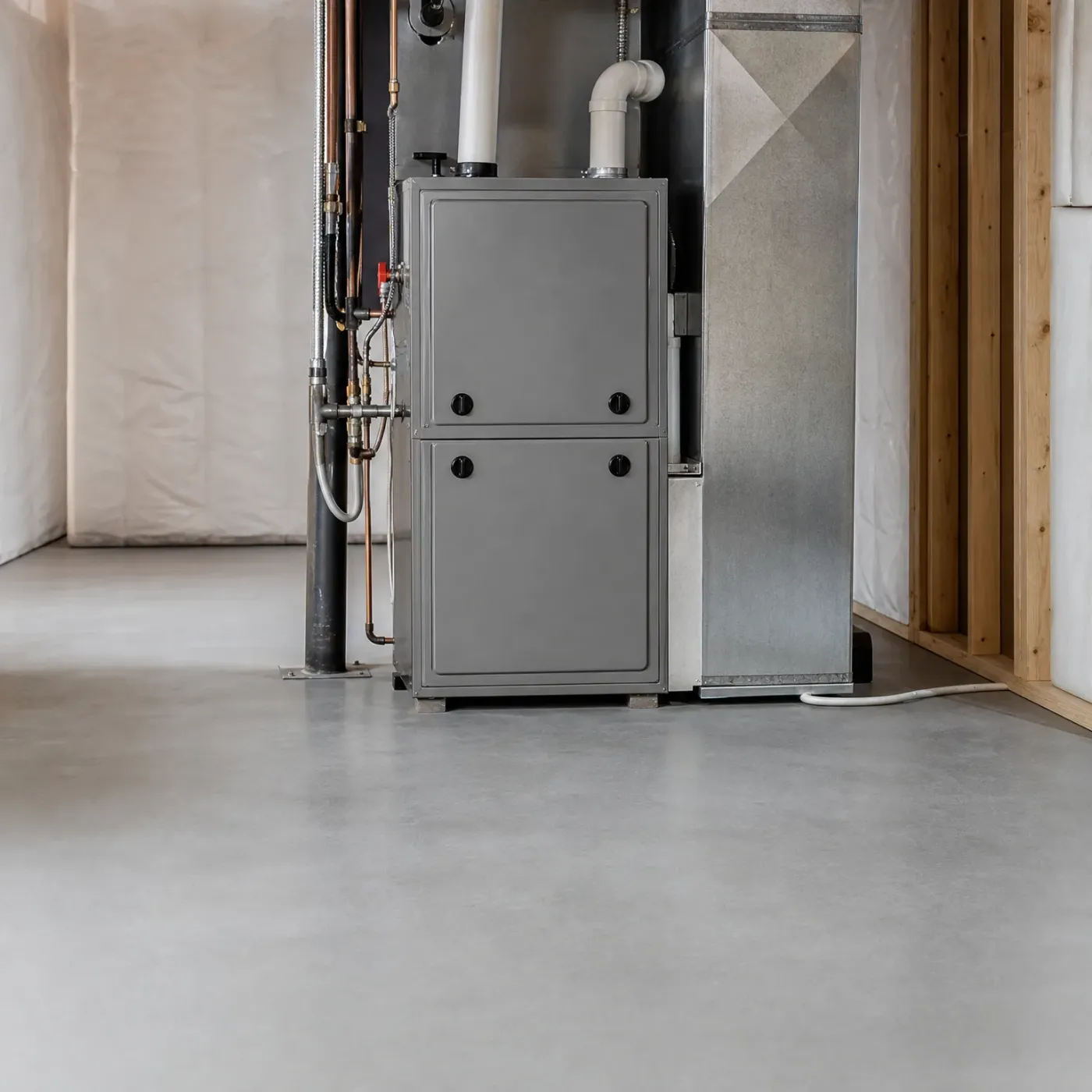
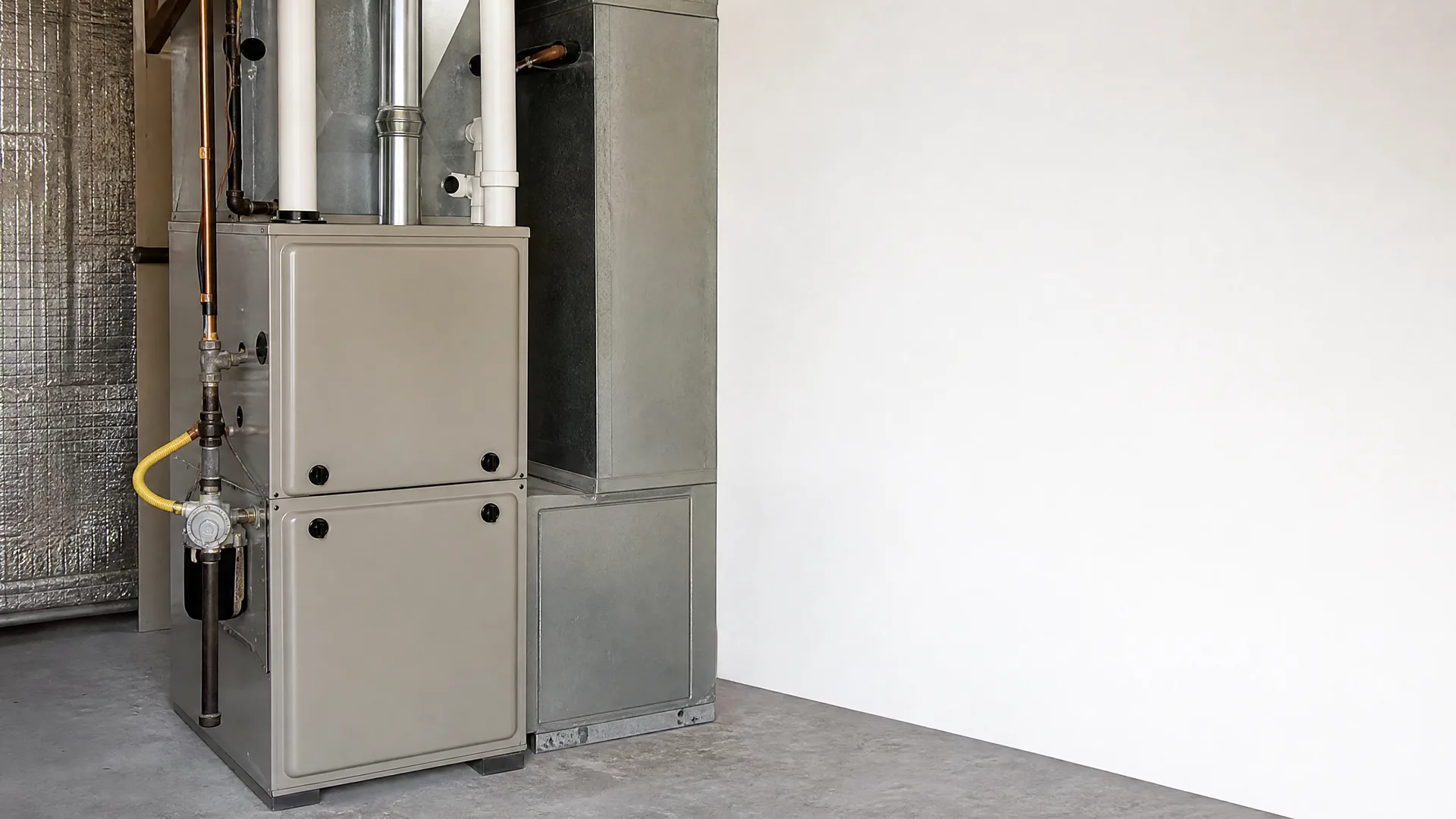
A beige residential gas furnace with white PVC vent pipes, copper and yellow gas lines, and adjacent sheet-metal ductwork stands on a concrete floor beside a plain white wall.

The igniter wears out first

Gas furnaces light the burners with a hot surface igniter, a thin strip that glows and heats up each cycle. It takes that strain for years, then it cracks. When it fails, the burners never light, the blower still runs, and cold air comes through the vents instead of warm. A contractor can test it with a multimeter in minutes and knows whether it needs replacing or whether something else is keeping it from firing.

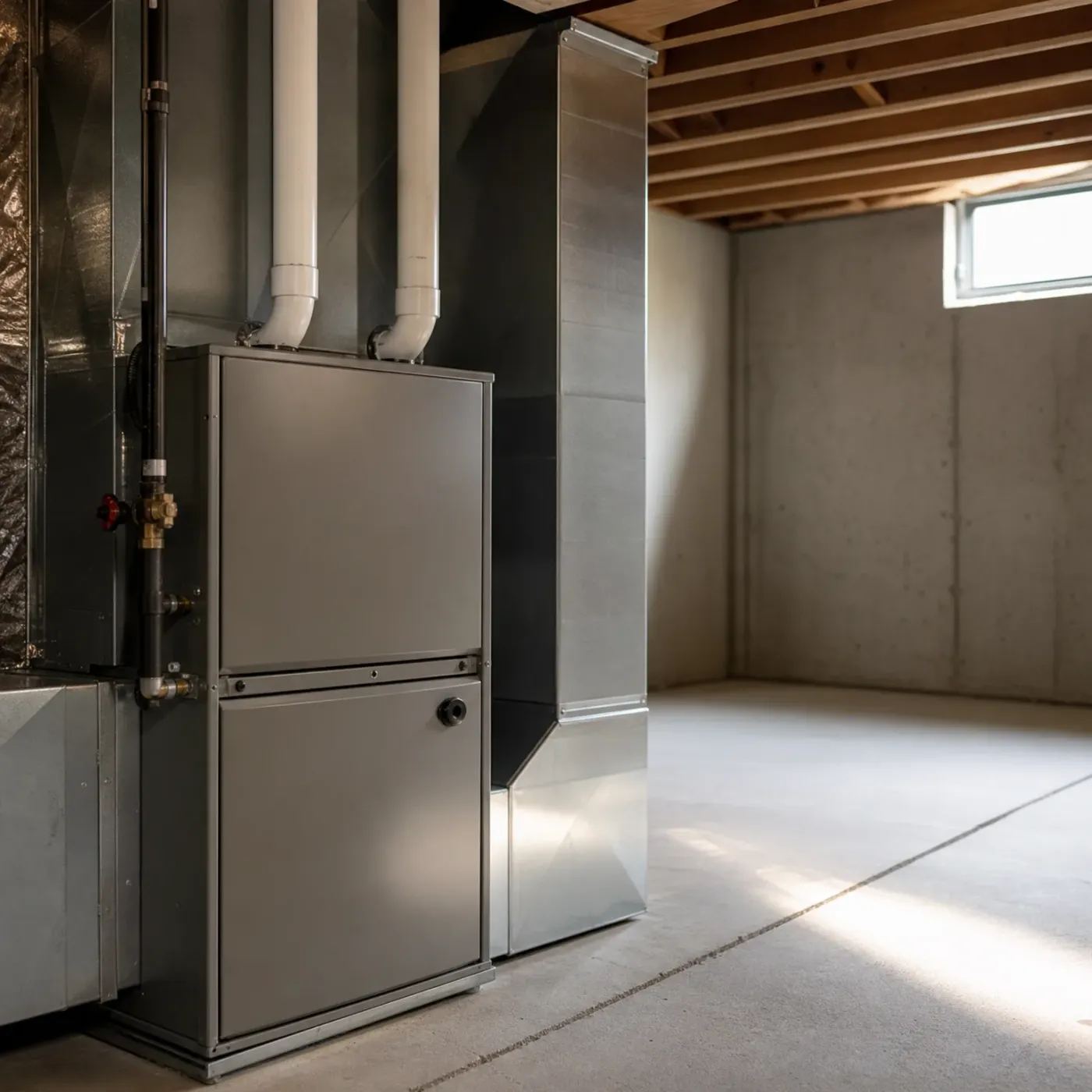
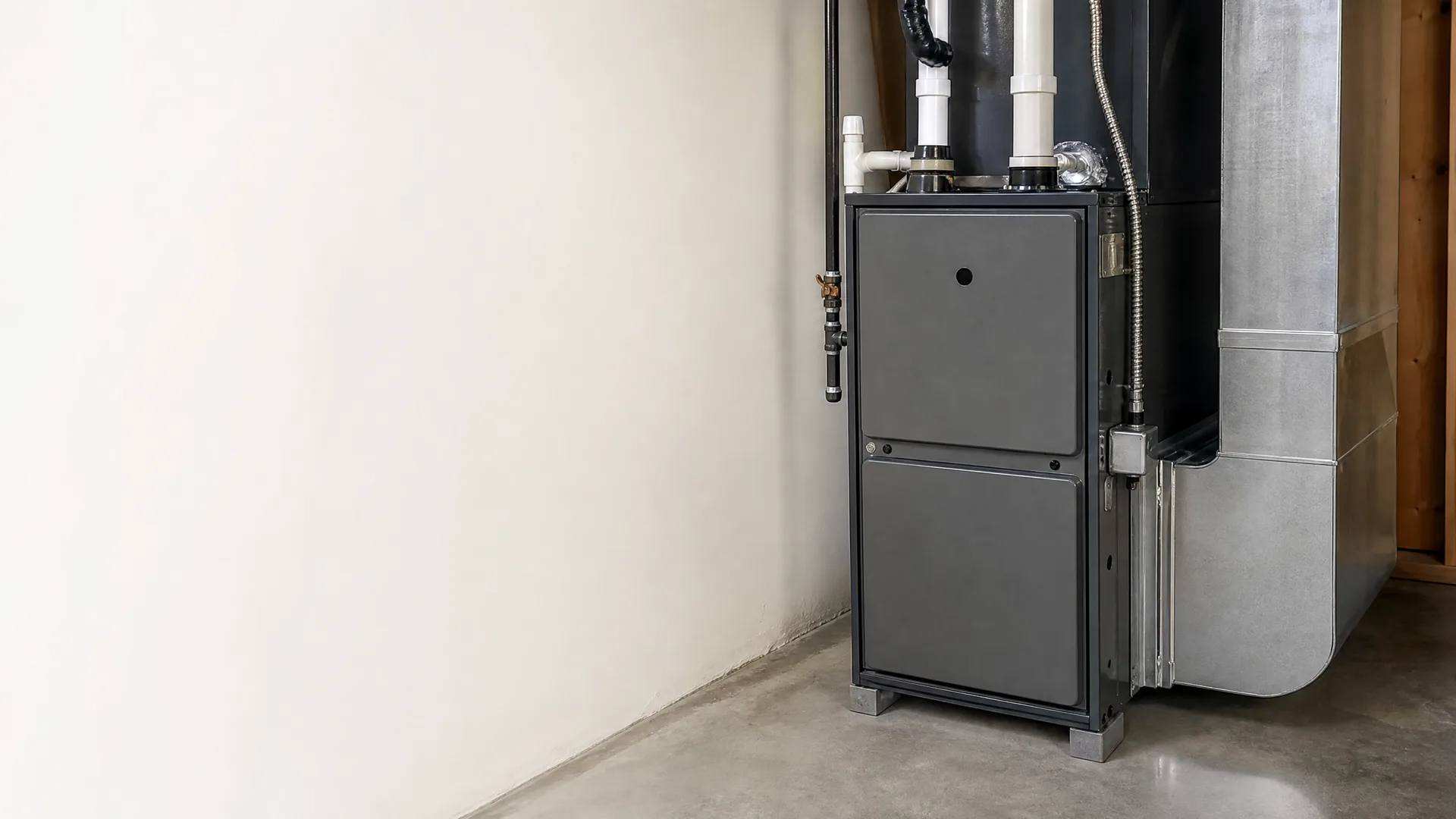
A gray high-efficiency furnace with white PVC vent pipes and metal ductwork stands on a concrete floor beside a plain off-white wall in a basement.

Cold air can mean no gas

Furnaces also need a steady gas supply to light the burners at all. If a valve was bumped shut, or the line feeding the furnace has an issue, the blower pushes air through the ducts with no flame behind it. That air feels cold because nothing heated it on the way through. Checking the gas supply is one of the first things a contractor looks at, since it rules out a problem with the furnace itself.

Is it blowing cold all the time, or just in bursts

Walk through the house and feel each vent. If every room is getting cold air and the thermostat still says it's calling for heat, the burners likely never lit at all. If you're only feeling a few seconds of cold air before it warms up, that's normal start-up lag and not the problem. Listen for the blower running without any warmth behind it, or a faint gas smell near the furnace, which means the burners tried to light and didn't. With Michigan nights dropping well below freezing, a furnace stuck on cold air long enough can let pipes near outside walls get cold enough to freeze.

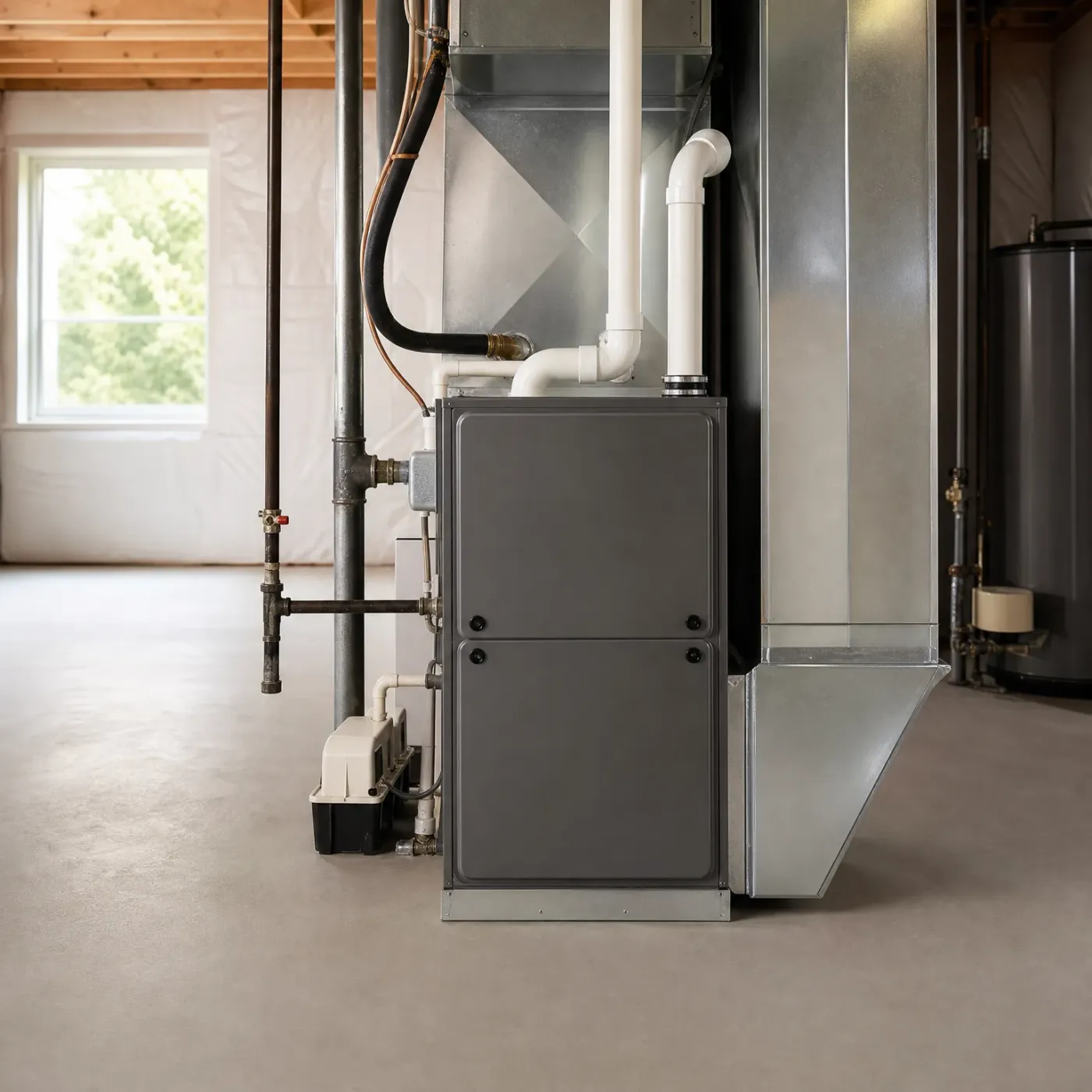
A gray high-efficiency furnace in a basement with sheet-metal ductwork, white PVC vent pipes, metal plumbing lines, a condensate pump on the floor, and a window showing green trees outside.

Running the way it should

A furnace like this fires up, the burners light, and warm air moves through the ductwork within a minute or two. The flue and condensate lines carry off exhaust and moisture the way they're built to. Nothing in the room should smell like gas or sound like grinding metal.
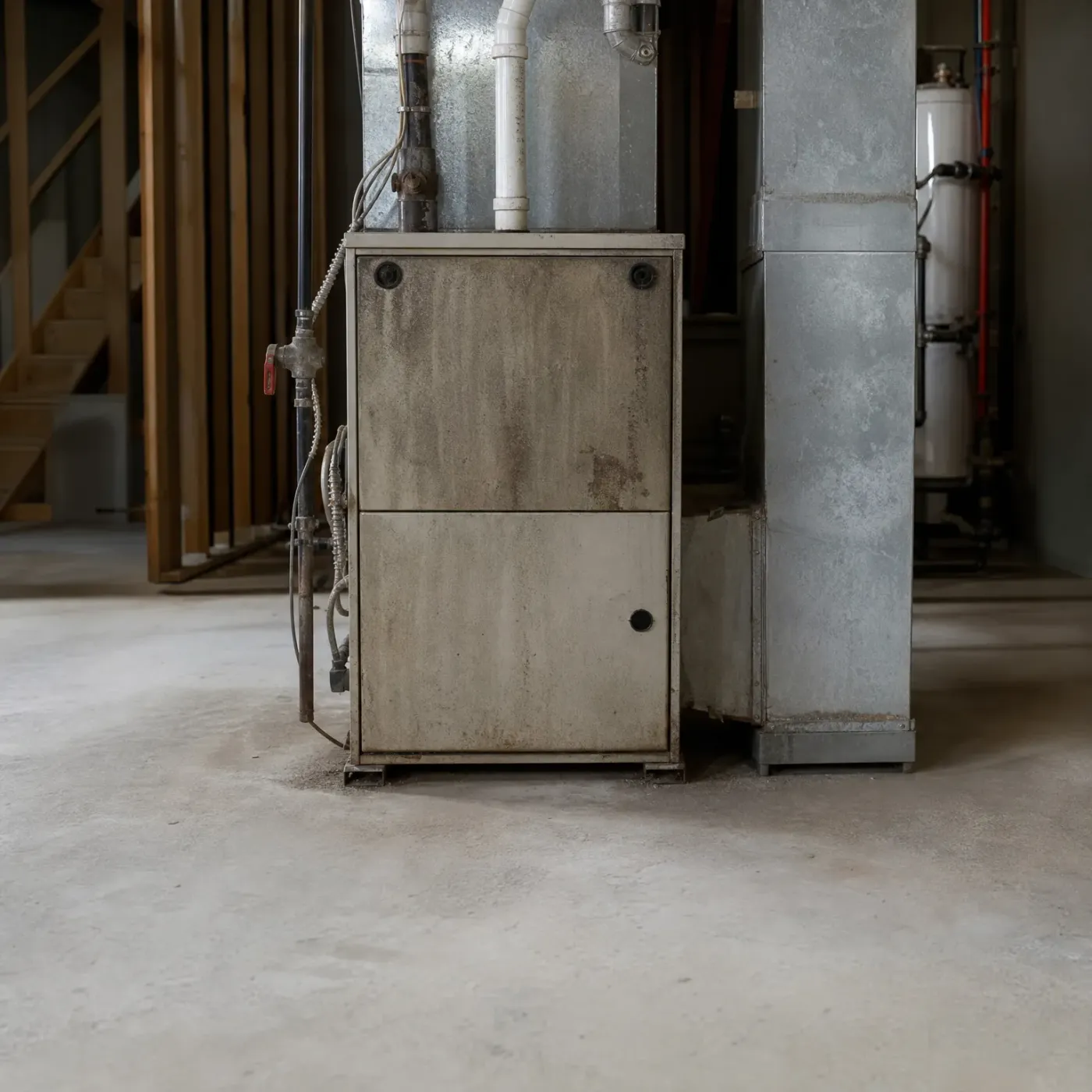

An older metal furnace with PVC and metal pipes stands on a concrete basement floor beside galvanized ductwork, with wooden stairs and a water tank in the background.

What trouble looks like up close

Dust built up like this on the cabinet and burners often means the furnace hasn't been serviced in a long time. Flexible gas lines left loose or bent, and condensate lines that look cobbled together, are worth a second look before the next cold snap.

A smiling man in a dark navy sweater sits on a light sofa in a living room, with a glass bowl of popcorn on a wooden coffee table and bookshelves behind him.
A smiling man in a dark green sweater sits on a tan leather sofa in a dimly lit living room, with a bowl of popcorn in the foreground and a kitchen area blurred behind him.
A smiling middle-aged man in a dark shirt sits on a gray sofa in a living room, with a bowl of popcorn on a side table and shelves, a window and kitchen area behind him.
A smiling bearded man in a dark gray t-shirt sits on a gray couch in a living room, with a large glass bowl of popcorn on a wooden table in the foreground.

Matched to your furnace job

A furnace that won't light stays broken until someone with a meter and the right igniter shows up. That part is not something to order and swap yourself, and running the blower on a bad igniter all night just burns power for air that never warms. Michigan winters do not leave room for guessing twice. If you've gone through the vents and the smell and you still have cold air moving through the house, the next step is getting a licensed furnace repair contractor out to look at the actual unit, not a search result. Send the details once and the search for who to call is off your plate. You keep the house warm sooner, and you stop losing evenings to a problem that was never going to fix itself. That part failing tonight has nothing to do with whether the rest of the system is sound, so there's no reason to wait on it.

The sequence behind every heat cycle

  • The thermostat calls for heat by closing a circuit, and the furnace control board reads that signal before anything else moves.
  • A draft inducer motor has to prove it's running, usually by a pressure switch, before the igniter gets power at all.
  • Only after the igniter glows hot enough does the gas valve open, so a stuck-closed valve leaves you with air and no flame.
  • The blower itself is on a time delay, so it keeps pushing air for a short stretch after the burners shut off or fail to light.
  • A flame sensor has to detect the burners within seconds or the control board cuts gas to the valve as a safety step.
  • None of these parts know the others failed, so the blower motor keeps doing its job even when the burners never do theirs.

A furnace does not just turn on. It moves through a set order, and every step has to clear before the next one starts. The thermostat sends a call for heat to the control board, and the board starts the draft inducer motor first, before any gas or spark. That motor has to pull enough exhaust through the flue to satisfy a pressure switch. No proof of draft, no igniter. Once the switch closes, the board sends power to the igniter and waits for it to reach the temperature the gas needs to light. Then, and only then, the gas valve opens. A flame sensor, a short metal rod near the burners, has to pick up the flame within seconds. If it doesn't, the board shuts the valve again, because an unlit gas valve left open is not something any furnace is built to risk. The blower runs on its own timer, separate from all of this, which is why it can keep moving air through the ducts for a while even after the burners have failed to light or shut down early. Each part in this chain checks its own job and nothing else. The inducer does not know if the igniter worked. The blower does not know if there was ever a flame. That is why a single failed part, somewhere early in the sequence, shows up at the vent as cold air and nothing more.

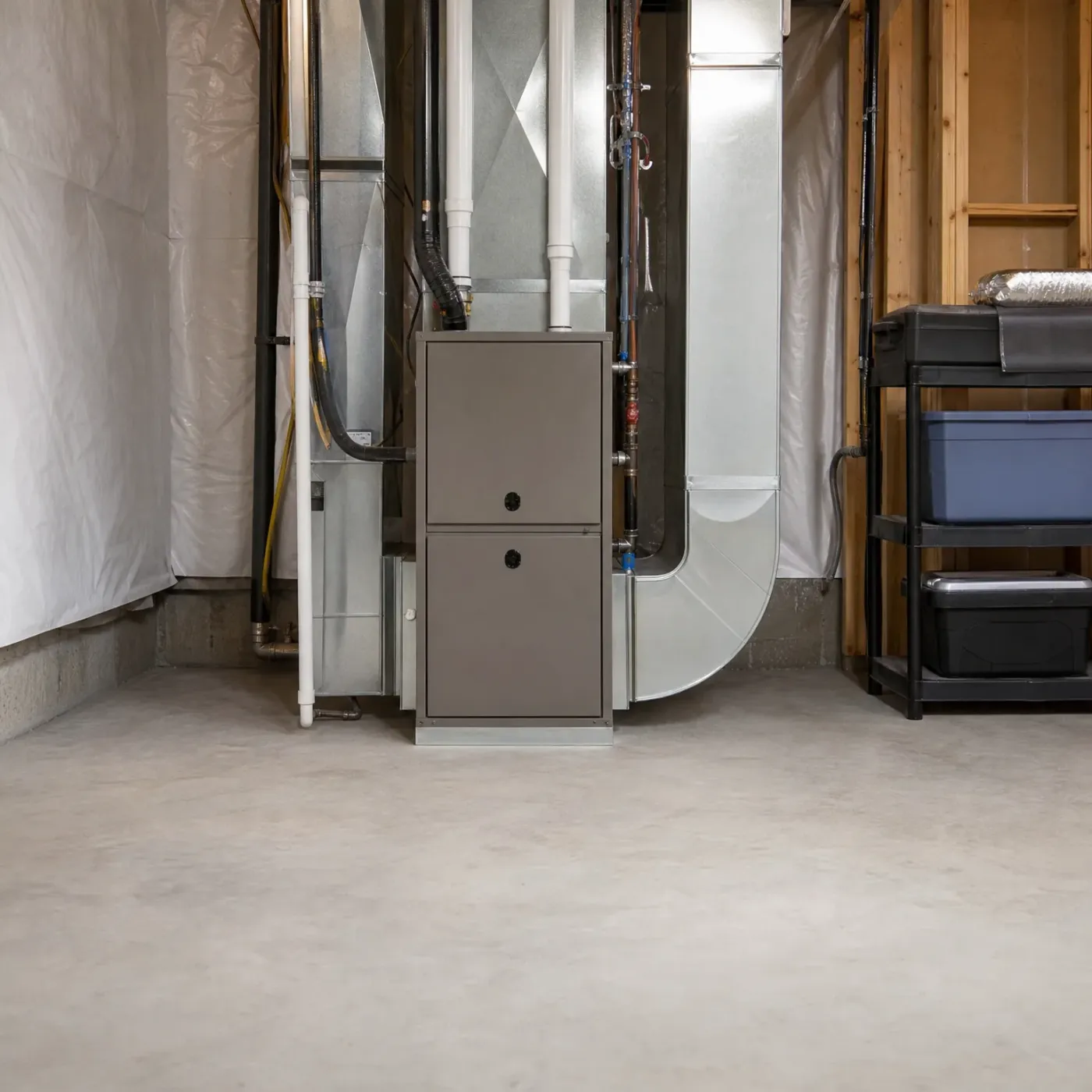
A basement utility area with a gray furnace, sheet-metal ductwork, pipes, plastic-covered walls, a concrete floor, and a black shelving unit holding storage bins.
A furnace like the one here is clean, the cabinet is solid, and the ductwork and gas line are doing exactly what they were installed to do.
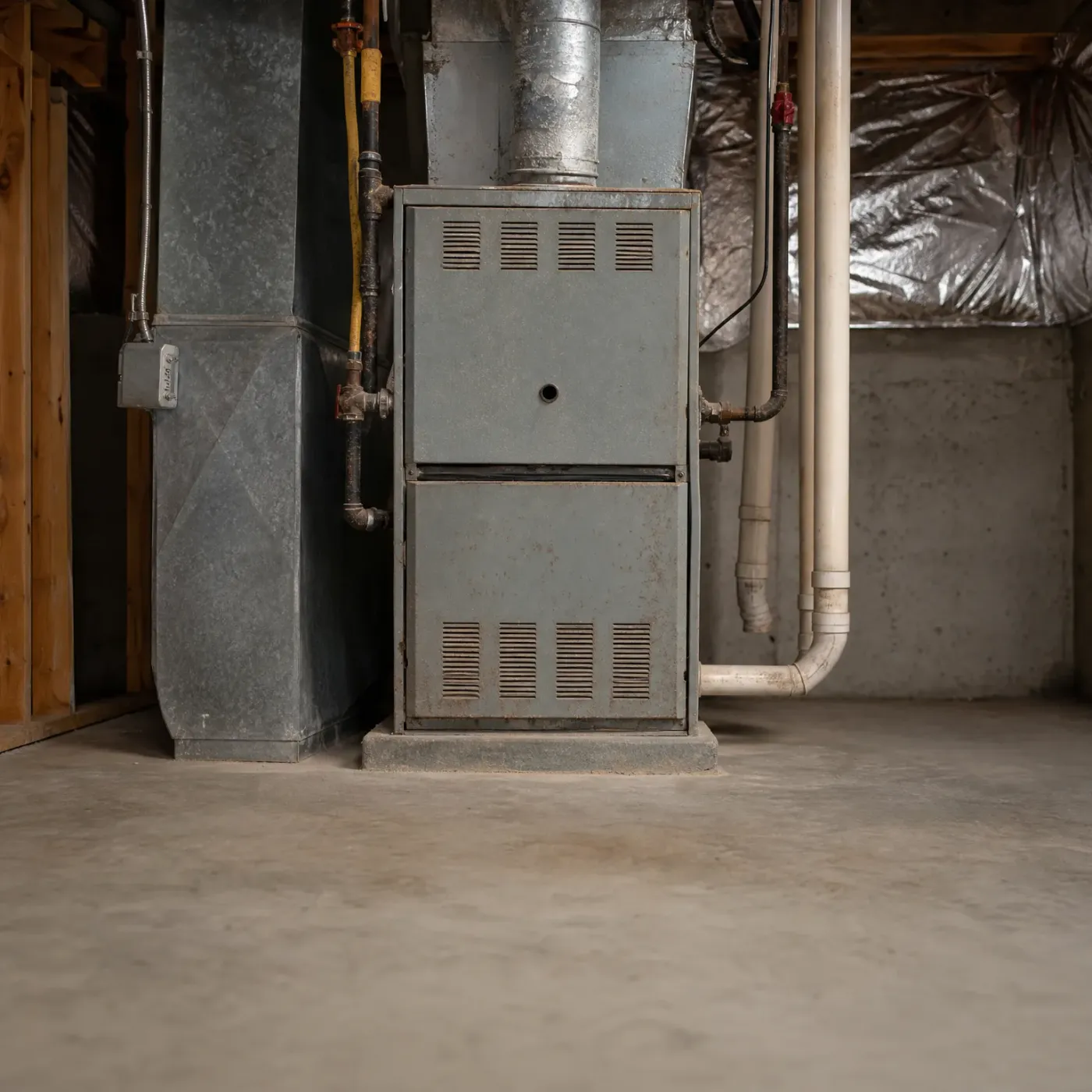
A gray metal furnace with louvered vent panels stands on a concrete basement floor beside galvanized ductwork, gas and plastic pipes, and foil-faced insulation along the ceiling and wall.
Rust on the cabinet and age on the unit are often where the trouble starts, especially on a furnace this old.
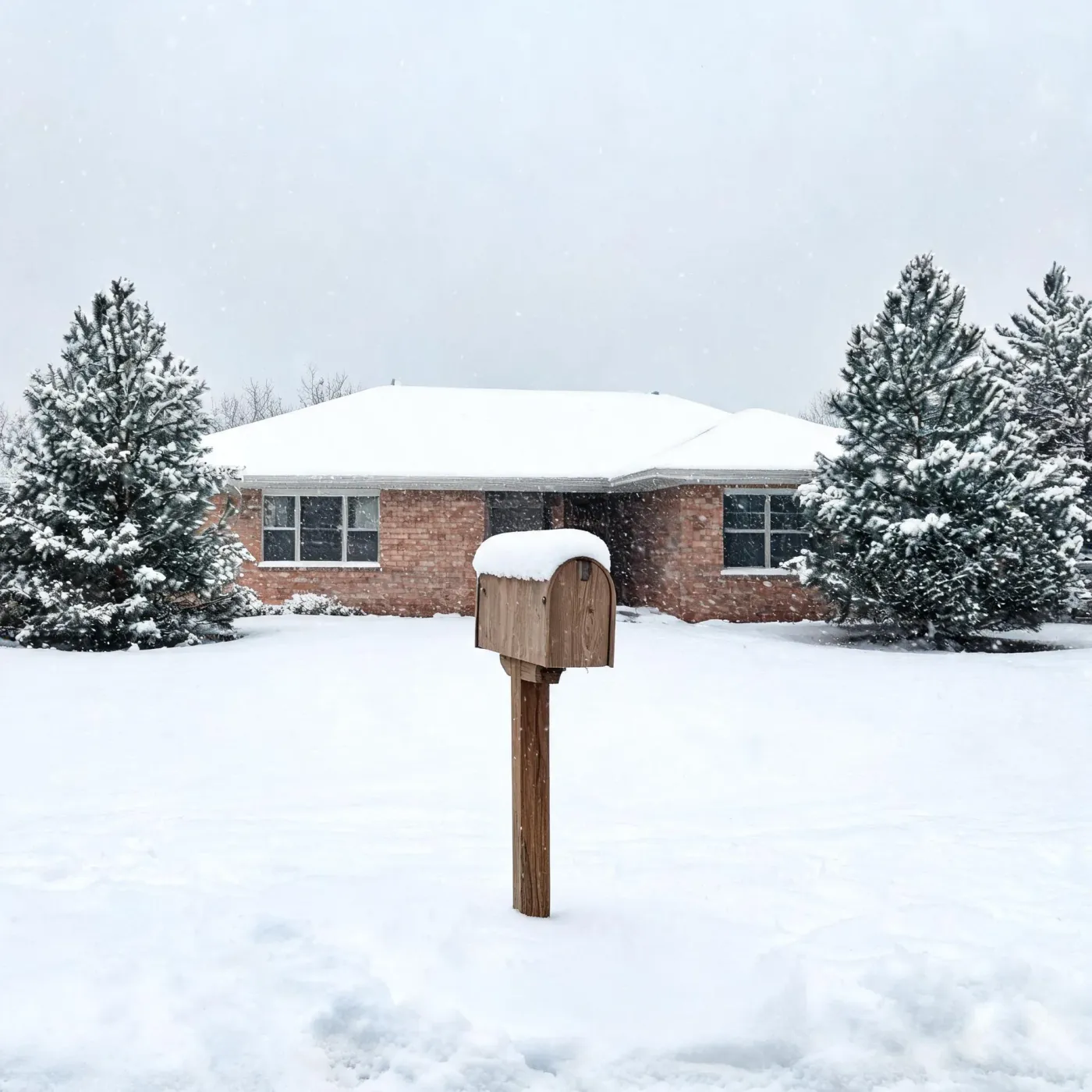
A snow-covered wooden mailbox on a post stands in a snowy yard in front of a single-story brick house flanked by snow-laden evergreen trees during falling snow.

Winter nights average 19°F across Michigan, according to NOAA climate data. That kind of cold means your furnace is running long cycles for hours at a stretch, not short bursts, and a weak igniter or a stuck inducer motor gets tested every single one of those hours. When something finally gives out, you feel it fast. A house that holds heat fine in October can drop several degrees within an hour once the burners stop lighting on a night this cold. The lower the outdoor temperature, the sooner you notice cold air coming from the vents instead of warm.

NOAA nClimDiv 1991-2020 county normals weighted by homes

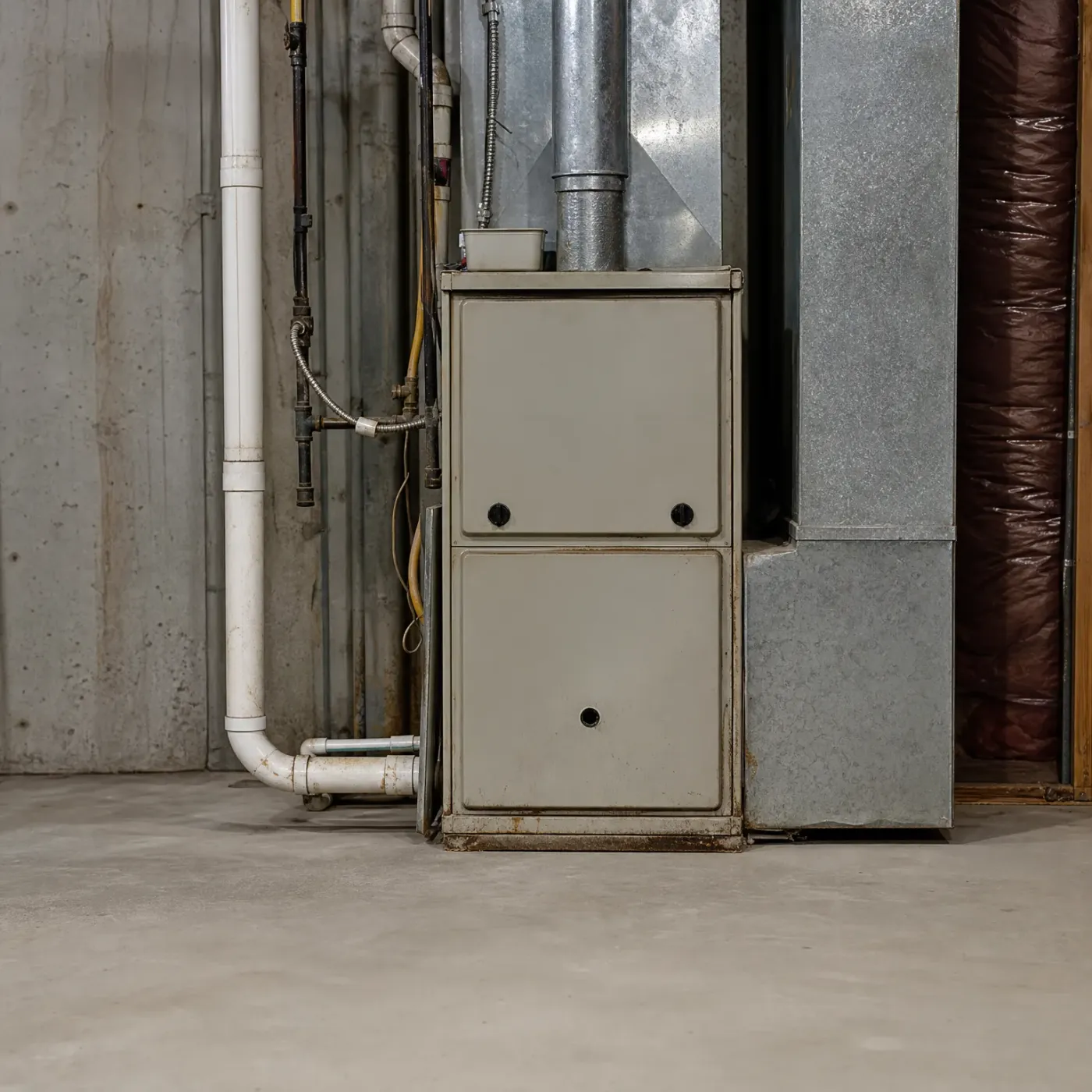
A beige furnace with two access panels stands against a concrete basement wall, with galvanized sheet-metal ductwork, a white PVC pipe, flexible conduit and insulated ducting around it.
Before you get your furnace repair
A gray furnace with white PVC vent pipes stands beside sheet-metal ductwork in a basement with a smooth concrete floor, exposed wood framing, and plastic sheeting on the walls.
After you get your furnace repair
  1. Thermostat calls for heat and signals the control board

  2. Draft inducer motor starts and proves airflow to the pressure switch

  3. Hot surface igniter heats up to light the burners

  4. Flame sensor confirms the burners are lit and stay lit

Winter nights average 19°F statewide

At 19°F, your furnace isn't cycling on and off, it's running long stretches just to hold the house steady. An igniter or inducer motor with a weak spot in it fails under that kind of steady load, not a quick burst.

NOAA nClimDiv 1991-2020 county normals weighted by homes

A furnace blowing cold air almost always traces back to one part: an igniter that won't glow, an inducer motor that won't prove itself, or a flame sensor too dirty to see the fire it's reading. None of those fix themselves, and none of them need a new furnace either. What they need is someone with a meter who can test each step in that chain and find the one that broke. Once you send the form, you're done hunting for who to call. A contractor who handles this gets matched to you and reaches out, and the house gets warm again without you spending another evening on the phone or standing at a vent with your hand out, waiting to feel something change. At 19°F outside, that's not a small thing to have off your plate.

A gray furnace with PVC vent pipes and sheet-metal ductwork stands against a wall in an unfinished basement with concrete floor and walls, exposed wood joists, and a small window.

A furnace pro near you

Request a pro

Send the request today and let a furnace pro reach out to you.

You only hire the pro if you want to.